
Loading Experience
Loading Experience
Most buyers now meet a project on a screen long before they meet a salesperson. A digital sales showroom is built for that moment: the sales gallery, open online, for every buyer, in every city, at any hour. Here is what it is, what it includes and why it is becoming part of how new homes are sold.
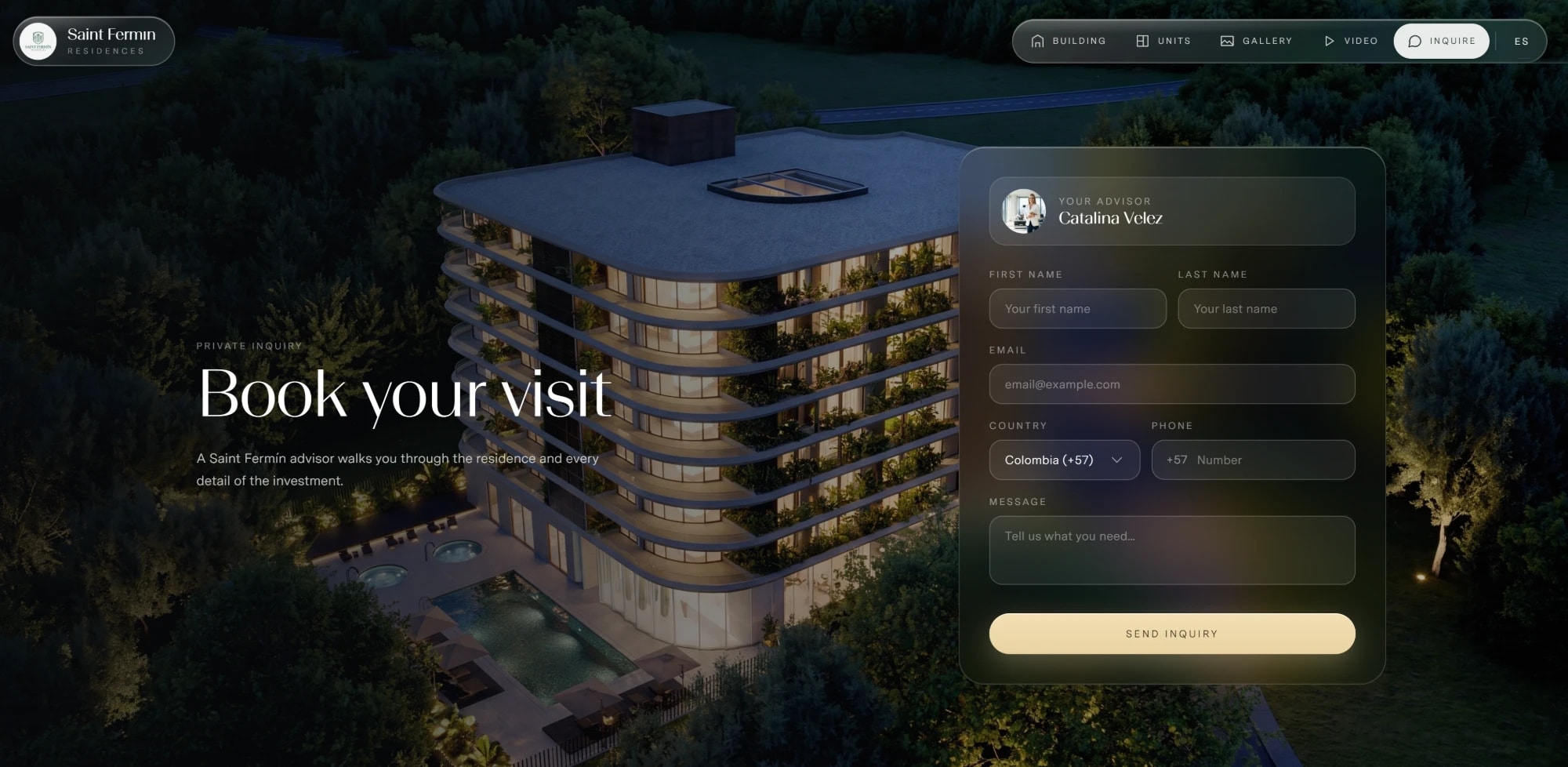
A digital sales showroom is the online version of a sales gallery. In one place, buyers can explore the project, see every available home with its plans, views and finishes, check what is still for sale and take the next step, from any device, without travelling.
It is not a brochure website and it is not a single virtual tour. A website tells buyers about a project; a showroom lets them shop it. The difference is the same as between a catalogue and a store: one describes the product, the other is built for the decision.
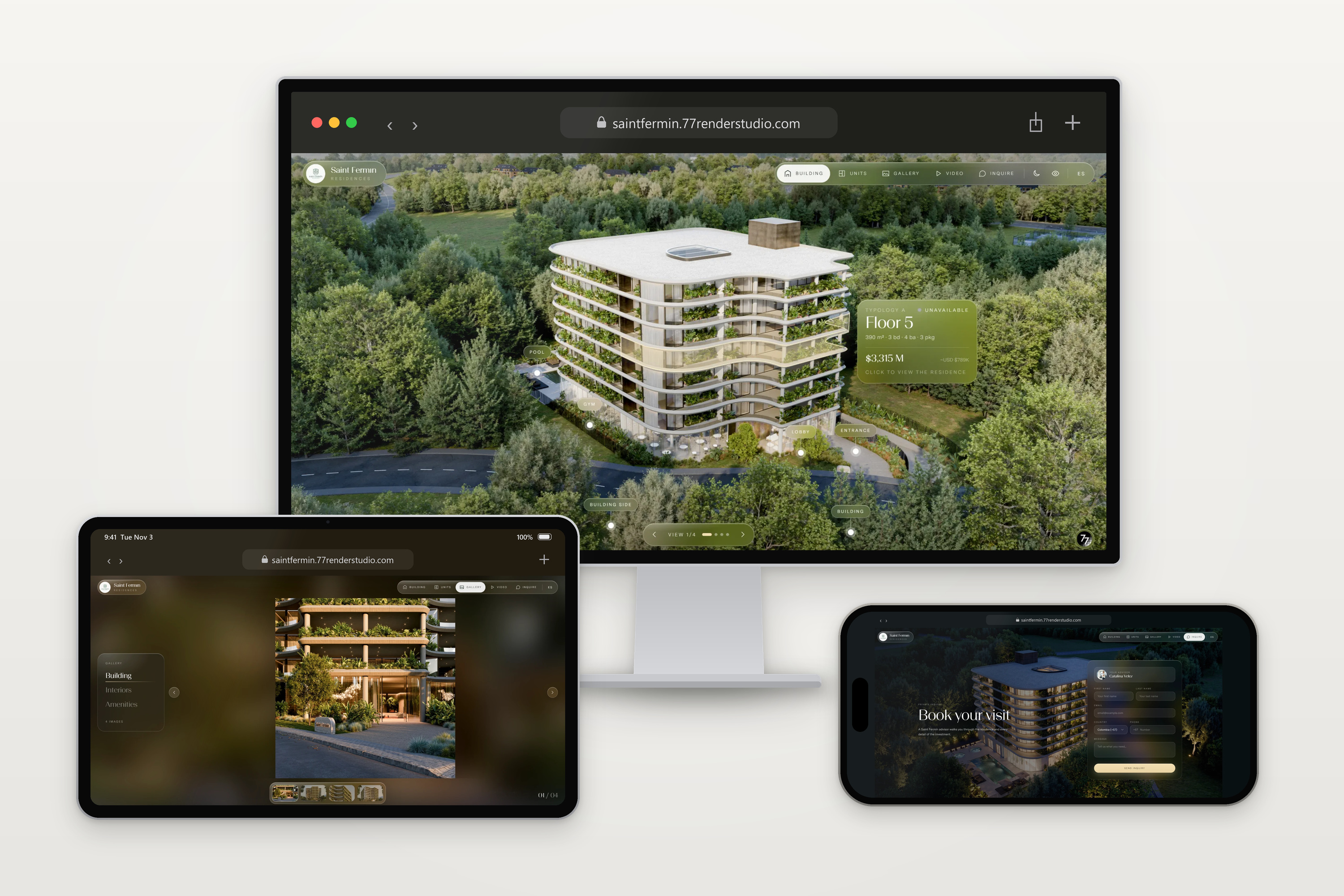
Everything a buyer would look for in a physical sales gallery, organised around the unit they will actually buy, plus what a gallery can't offer: live availability and data.
The place: Location, masterplan, aerials, amenities and the atmosphere of the project. The reason to want to live there.
The homes: Every typology with its interiors, real views, finishes and a clear plan, ideally a 3D isometric plan.
Live availability: Which units are available, reserved or sold, updated in real time and explorable floor by floor.
The next step: A direct path to enquire, book a call or a visit, or reserve, without leaving the experience.
Behind those four sits a fifth layer the buyer never sees: data. Every visit tells the developer something about demand, and that is where a showroom starts working for the sales team, not only for the buyer.
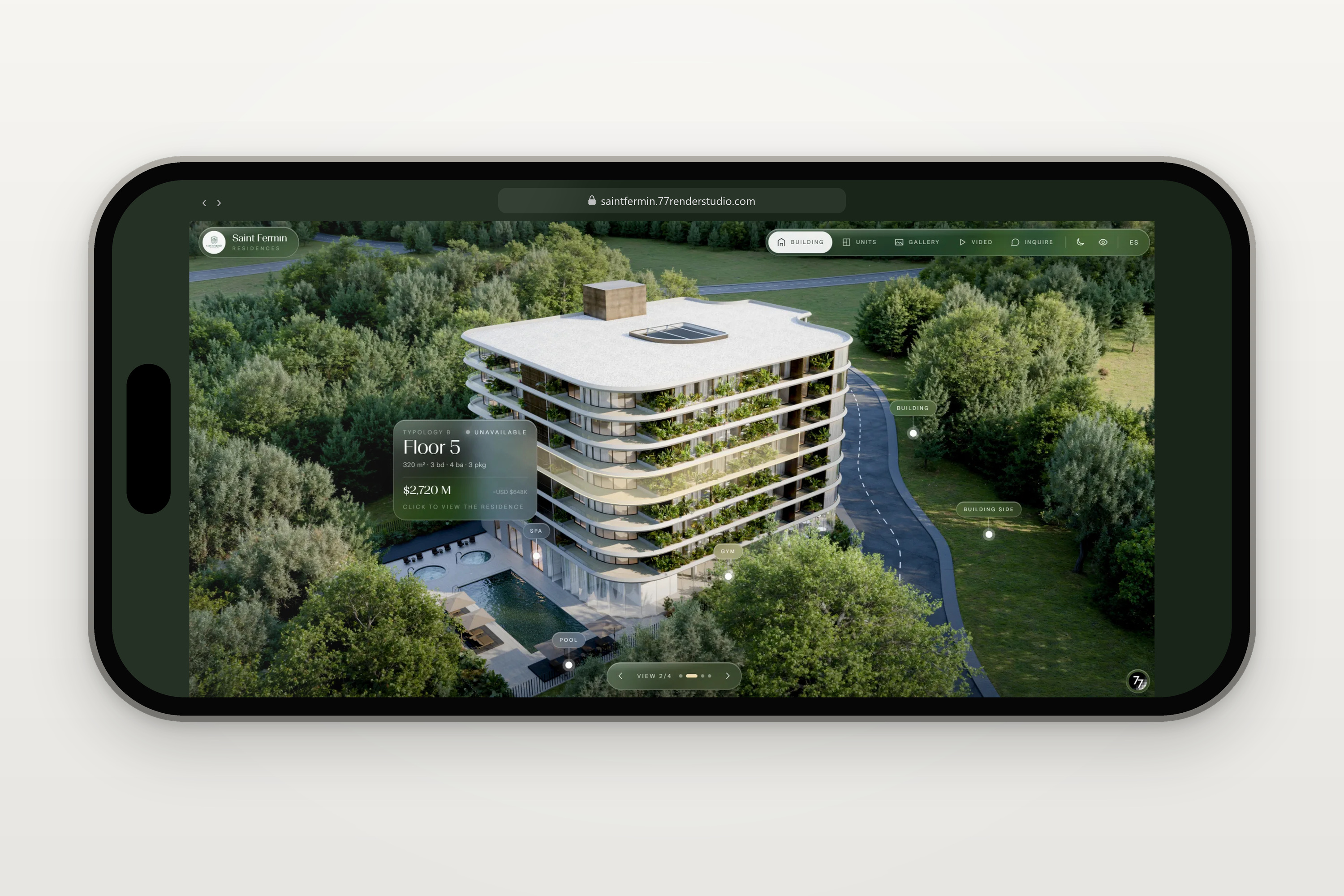
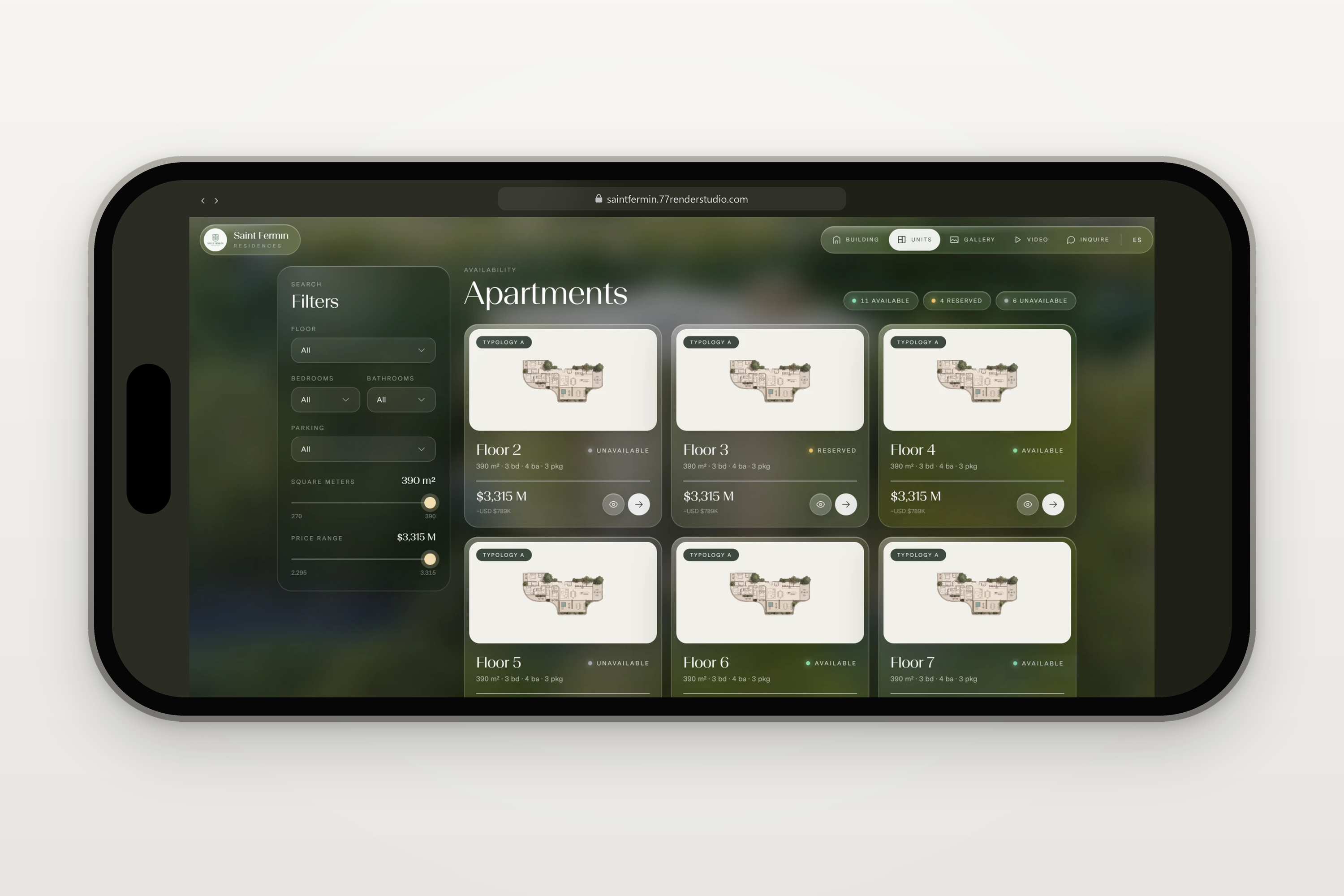
Because the first visit has already moved online, and a growing share of buyers will never make the second one in person. A showroom is how a project competes at the moment the decision starts.
In the US, 52% of buyers found the home they bought online, and for 46% the first step was searching the internet. (NAR, 2025 Profile of Home Buyers and Sellers, US buyers, July 2024 to June 2025) For new developments, that first step often happens before there is anything to visit.
Distance matters too. International buyers purchased $45.3 billion worth of US homes between April 2025 and March 2026, and 44% of them lived abroad when they bought. (NAR, 2026 International Transactions in U.S. Residential Real Estate, July 2026) The figures are for the US, but the pattern is familiar in any market that sells to second-home buyers, investors or relocating families: the buyer is somewhere else. A physical gallery reaches the people who can walk into it. A digital showroom reaches everyone else.
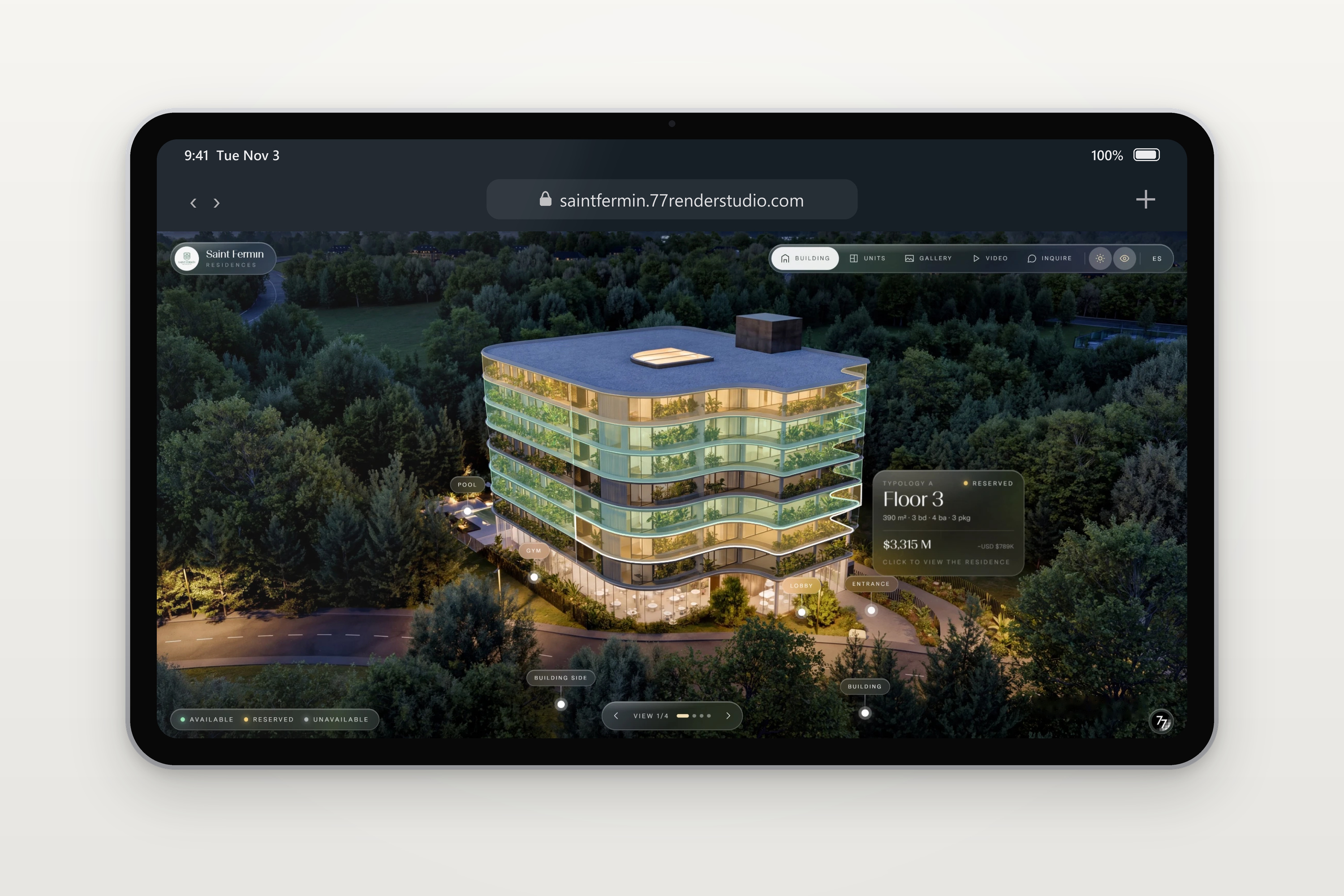
A virtual tour is a feature; a showroom is a sales environment. A tour shows a space. A showroom connects that space to a specific unit, its availability, its price logic and the next step.
Having the tool is not what moves buyers. A Harvard Business School study of more than 75,000 home sales in Los Angeles found that, once photo quality was taken into account, simply adding a virtual tour had no significant effect on sale price. (Harvard Business School Working Knowledge, 2023, Redfin data 2019 to 2021) What matters is how well the project is shown and how easily a buyer can go from wanting it to choosing it.
What buyers actually want, before they say it. A showroom records which homes get attention, how long buyers stay, where they come from and which channels bring them, and lets the sales team compare that interest with what actually sells.
Demand by unit: Which typologies, floors and views get the most visits and the longest time.
Origin: Which cities and countries buyers are browsing from, to plan campaigns and sales trips.
Channels: Which campaigns, partners and agents bring the visitors who go on to enquire.
Interest vs sales: How viewed units compare with sold units, to adjust pricing, mix and the next release.
This is also what connects the showroom to the rest of the sale. When enquiries flow straight into the CRM with the units each buyer explored, the sales team starts every conversation already knowing what the buyer wants. It's the logic behind the showrooms we build at 77.
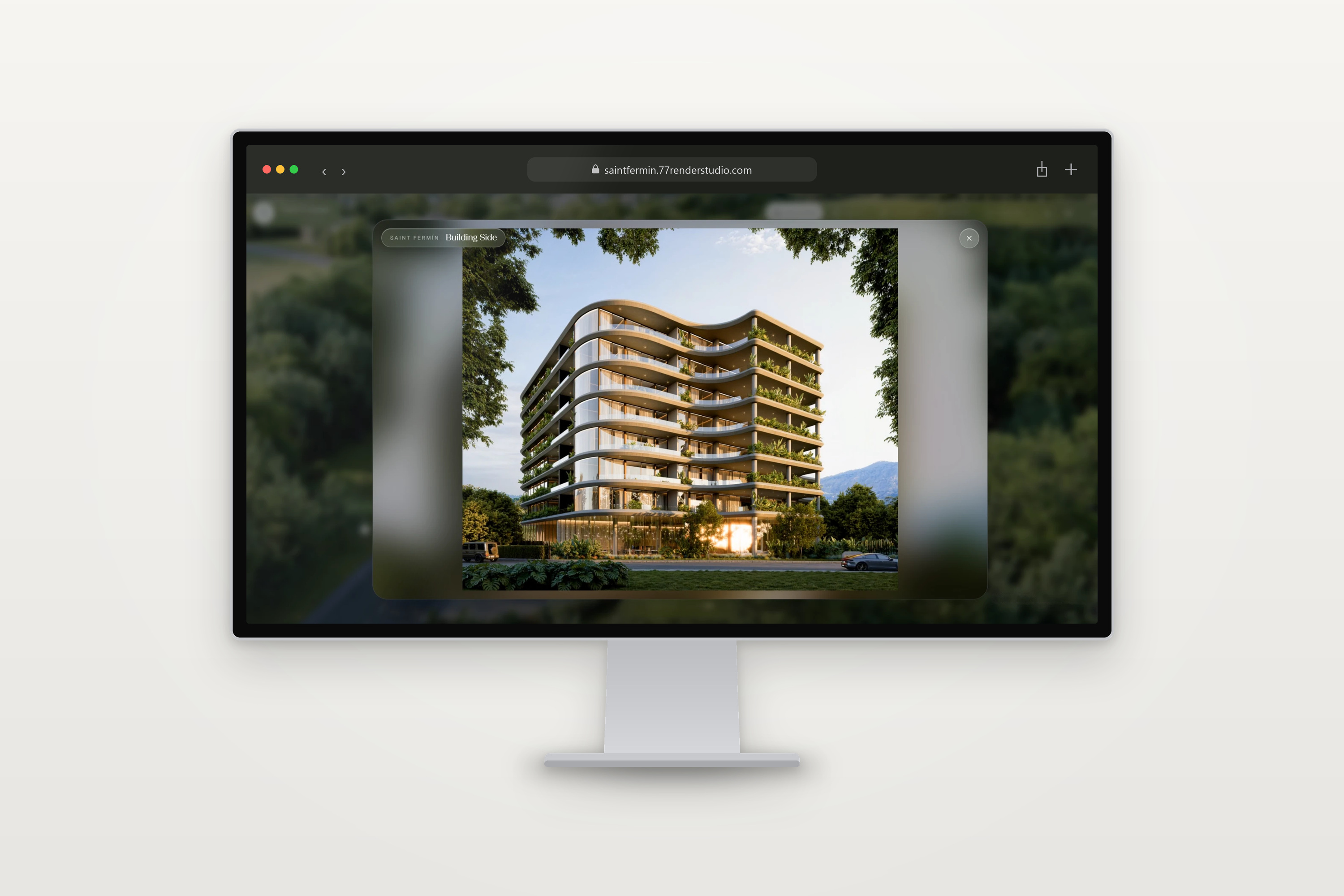
No. It extends it. The physical gallery still matters for buyers who can visit; the showroom serves everyone else, works before the gallery opens and keeps selling after hours.
A digital process can also make a launch fairer and faster. At The Marlow on Mill in Cape Town, the project's sales team reported 68 apartments sold within 10 minutes of launch, through a fully digital purchase process. As Shelly Keys, Western Cape area manager at Pam Golding Properties, put it: "The purchase process is fully digital, ensuring transparency and equal access." (Pam Golding Properties, sales agency for the developer, September 2025) .
Quality, clarity and a short path to the next step. Before going live, check that a buyer could choose their home alone, from their phone, without calling anyone.
Can a buyer see every available unit, and what has already sold?
Does each typology have its own interiors, real views and a clear plan?
Does it work as well on a phone as on a desktop?
Is there one clear next step on every screen: enquire, book or reserve?
Does every visit and enquiry reach the sales team, with the units the buyer explored?
Does it use the same visual language as the rest of the project's marketing?
Thinking about a digital showroom for your project?
77 is a full-stack visualization and PropTech studio for real estate. We design and build digital showrooms with the renders, plans and films that make every unit sellable online.
→ Start a project with 77
Sources
National Association of Realtors: 2025 Profile of Home Buyers and Sellers (buyers from July 2024 to June 2025). United States
National Association of Realtors: 2026 International Transactions in U.S. Residential Real Estate (July 2026, data April 2025 to March 2026). United States
Harvard Business School Working Knowledge: research on virtual tours and home prices (2023, Redfin data 2019 to 2021). Los Angeles, United States
Pam Golding Properties, sales agency for the developer: The Marlow on Mill launch (September 2025). Cape Town, South Africa
Let's talk about how visualization and a digital showroom can shorten your sales cycle.