Who is the remote buyer?
Anyone who decides from somewhere else: international buyers and investors, families relocating for work, people from the diaspora buying back home and second-home buyers who live hours away. What they share is distance, and distance changes how a project has to be sold.
The US gives a clear picture of how big that group is. Foreign buyers purchased 67,100 US homes worth $45.3 billion between April 2025 and March 2026. 44% of them lived abroad when they bought, and those buyers alone accounted for $23.5 billion. (NAR, 2026 International Transactions in U.S. Residential Real Estate, July 2026)
They are also decisive buyers. 48% of foreign buyers in the US paid all cash, compared with 28% of all existing-home buyers. (NAR, July 2026) When a remote buyer is convinced, the sale can move fast. The challenge is getting them convinced from a distance.
Where are international buyers buying?
They concentrate in markets that combine lifestyle, stability and a familiar community. In the Americas, South Florida leads by far, driven by Latin American buyers. In Europe, Spain's coasts and islands set records.
United States. Florida takes 20% of foreign buyers, California 19% and Texas 12%. The top origins are Canada (16%), Mexico (14%), China (11%) and India (9%). (NAR, July 2026)
South Florida. 15% of buyers were foreign in 2025, about seven times the US share. Colombia leads with 15% of them, followed by Argentina (12%), Mexico (7%) and Brazil (7%). (MIAMI REALTORS, January 2026)
New construction in South Florida. International buyers bought 49% of new construction, pre-construction and condo conversion sales over 18 months to mid-2025, and about 86% of them were Latin American. (MIAMI REALTORS, July 2025)
Spain. Foreigners made 15.98% of all home purchases in Q2 2026, a record. In the Balearic Islands the share was 32.27%, in the Valencia region 31.03% and in the Canary Islands 29.33%. (Colegio de Registradores, Q2 2026)
For developers in Latin America, the South Florida data is worth reading twice. The same buyers who fly to Miami to buy pre-construction are the buyers a project in Medellín, Mexico City or São Paulo can reach online, if it is presented at the same level.
Why is it harder to sell to someone who isn't there?
Because everything a site visit does on its own has to be done on purpose. A buyer who visits feels the light, the size of the rooms, the neighborhood and the people behind the project. A remote buyer only gets what you show them.
Imagination. Off-plan, there is nothing to visit. The buyer has to picture the exact home, not just the building.
Trust. They are sending a deposit to a company they may never meet, in a market they may not know well.
Distance and time. Different time zones, languages and currencies. Every unanswered question costs days.
More people decide.Family, partners and advisors often join the decision from different places, and they all need to see the same thing.
What does a remote buyer need to see to decide?
The home they will actually buy, the place around it and a clear path to the next step. Generic images of the building are not enough when there is no visit to fill the gaps.
Buyers already tell us what matters most online. In the US, 81% of buyers rated photos as very useful when searching online, 77% said the same about detailed property information and 57% about floor plans. (NAR, 2025 Profile of Home Buyers and Sellers) And 70% say 3D tours give them a better feel for a home than photos alone. (Zillow, Consumer Housing Trends Report 2025) For a buyer who will never visit, those formats are not extras. They replace the visit.
Step 1: Show the exact home, not just the project
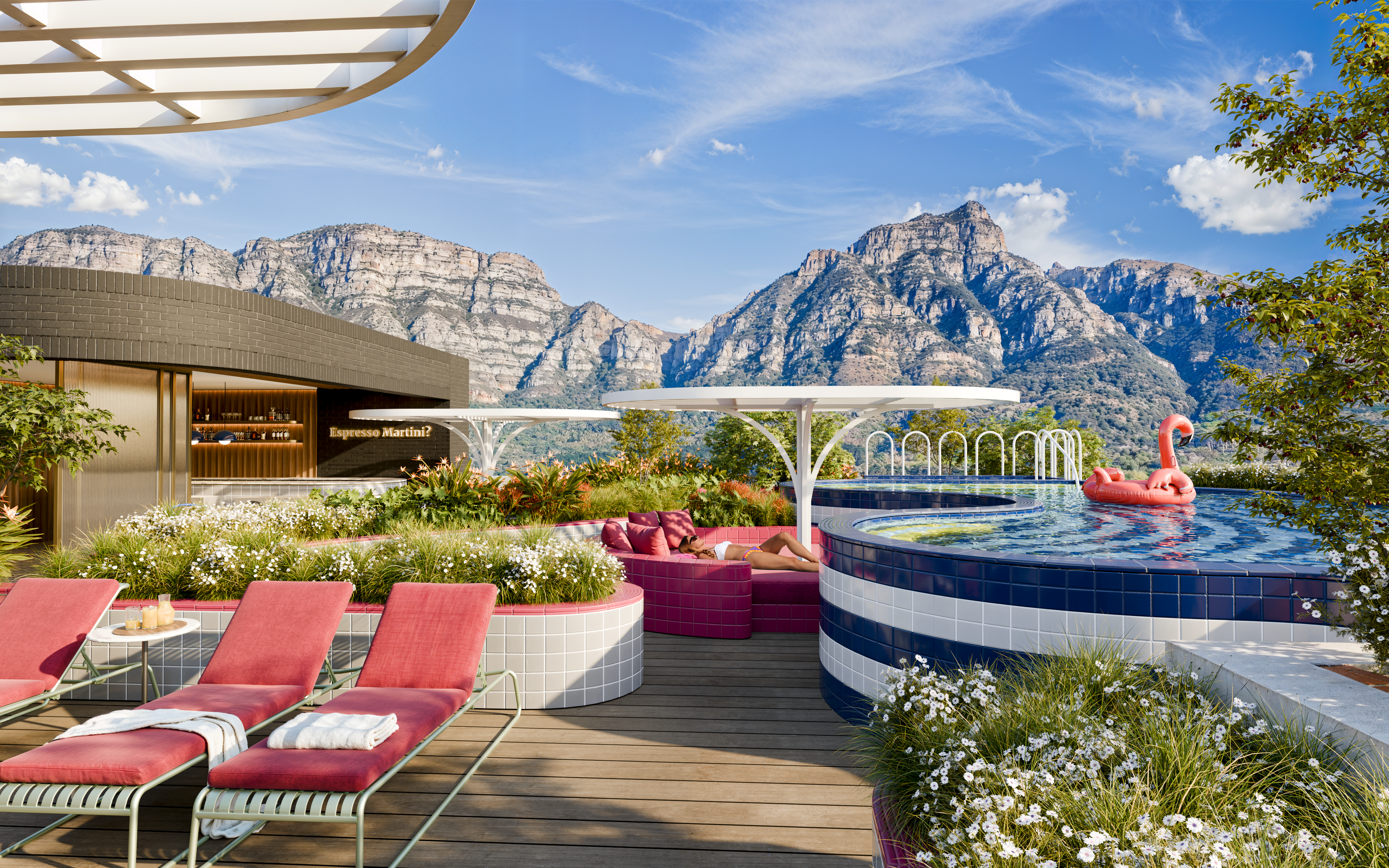
Every typology deserves its own interiors, real views from its floor and a clear plan, ideally a 3D isometric plan that shows how the space works. A remote buyer is choosing one specific unit, so that is what the visuals have to show.
Step 2 : Sell the place
The neighborhood, the views, the amenities and how life feels there. Aerials, films and context images answer the question every remote buyer asks first: what would it be like to live here?
Step 3: Put the sales gallery online
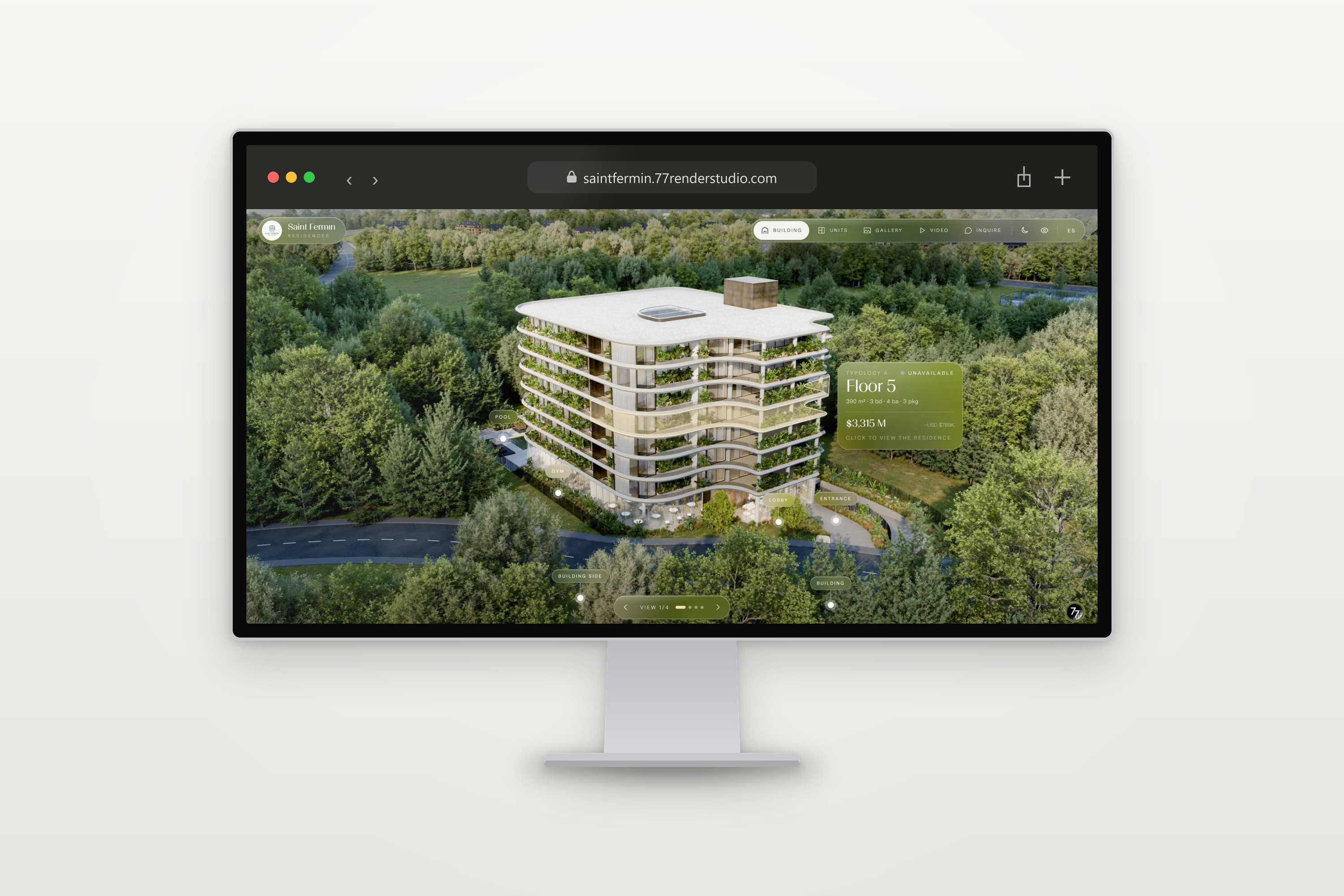
A digital sales showroom gives remote buyers what the gallery gives local ones: every available home, live availability, plans, finishes and the project's story in one place, on any device. It should work in the buyer's language and as well on a phone as on a desktop.
Step 4: Make the next step remote too
Book a video call with an advisor, reserve online, sign digitally. Every step that requires being there in person is a step where a remote buyer can drop out. In Dubai, the Dubai Land Department's Digital Sale service on the Dubai Now app already lets buyers complete the contract, e-signature, payment and title deed fully remotely. (Dubai Land Department, October 2025)
Step 5: Follow up with what the buyer already explored
When enquiries reach the sales team with the units each buyer looked at, where they are browsing from and which channel brought them, the first call is a real conversation, not a cold one. Across time zones, that saves days.
Step 6: Keep one visual language from the first ad to the contract
Remote buyers judge a developer by consistency. When the campaign, the showroom, the brochure and the documents look like the same project, trust builds without a visit.
Can the whole purchase really happen online?
Yes, and in some markets it already does. When the process is designed for it, a fully digital purchase can be faster and fairer for everyone.
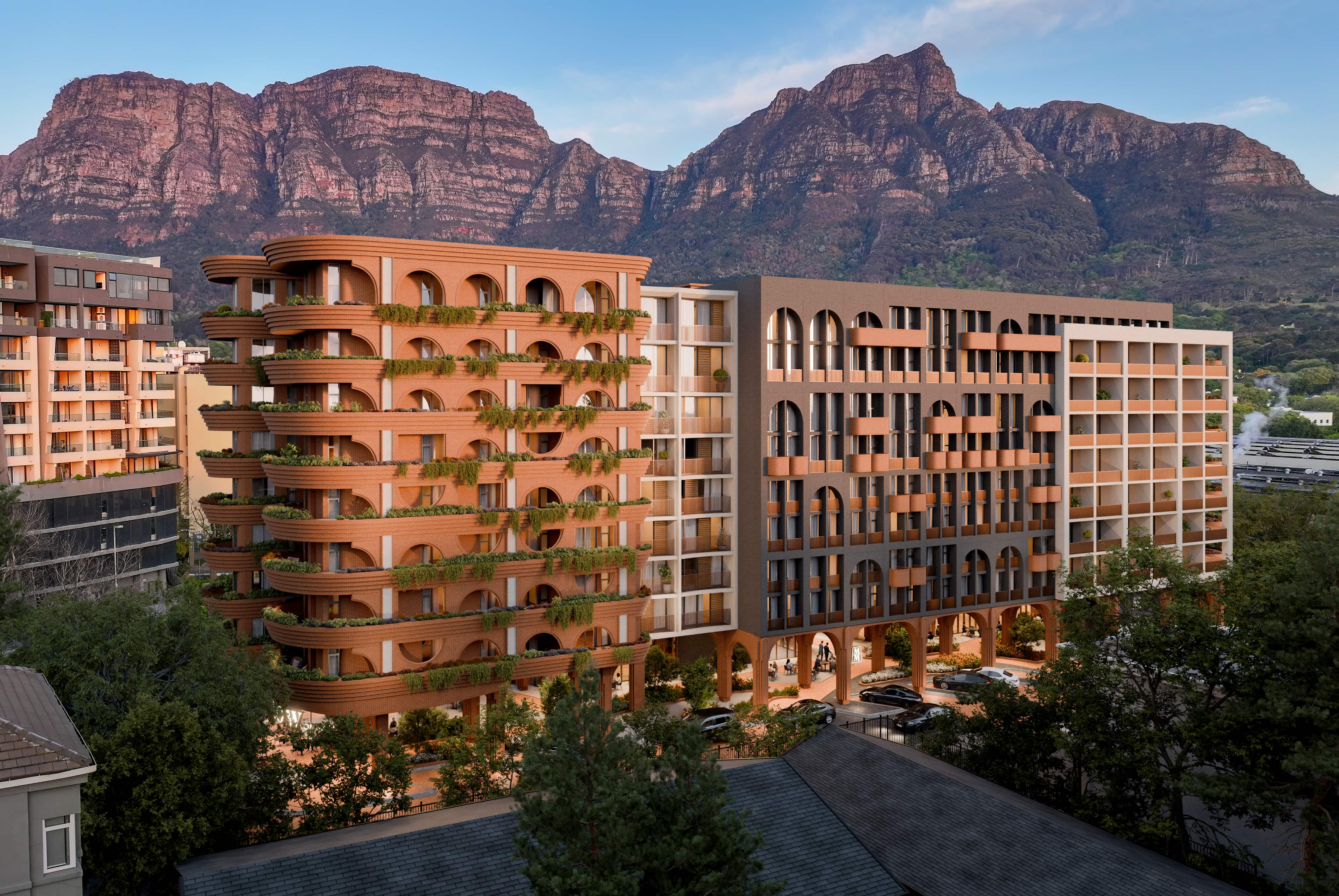
At The Marlow on Mill in Cape Town, the sales team reported 68 apartments sold within 10 minutes of launch through a fully digital purchase process. (Pam Golding Properties, sales agency for the developer, September 2025) In Dubai, the full transaction can be completed through an app. (Dubai Land Department, October 2025) Not every market allows a fully remote closing yet, but every market allows the decision to happen online. That is the part a developer controls.
How 77 supports remote and international sales
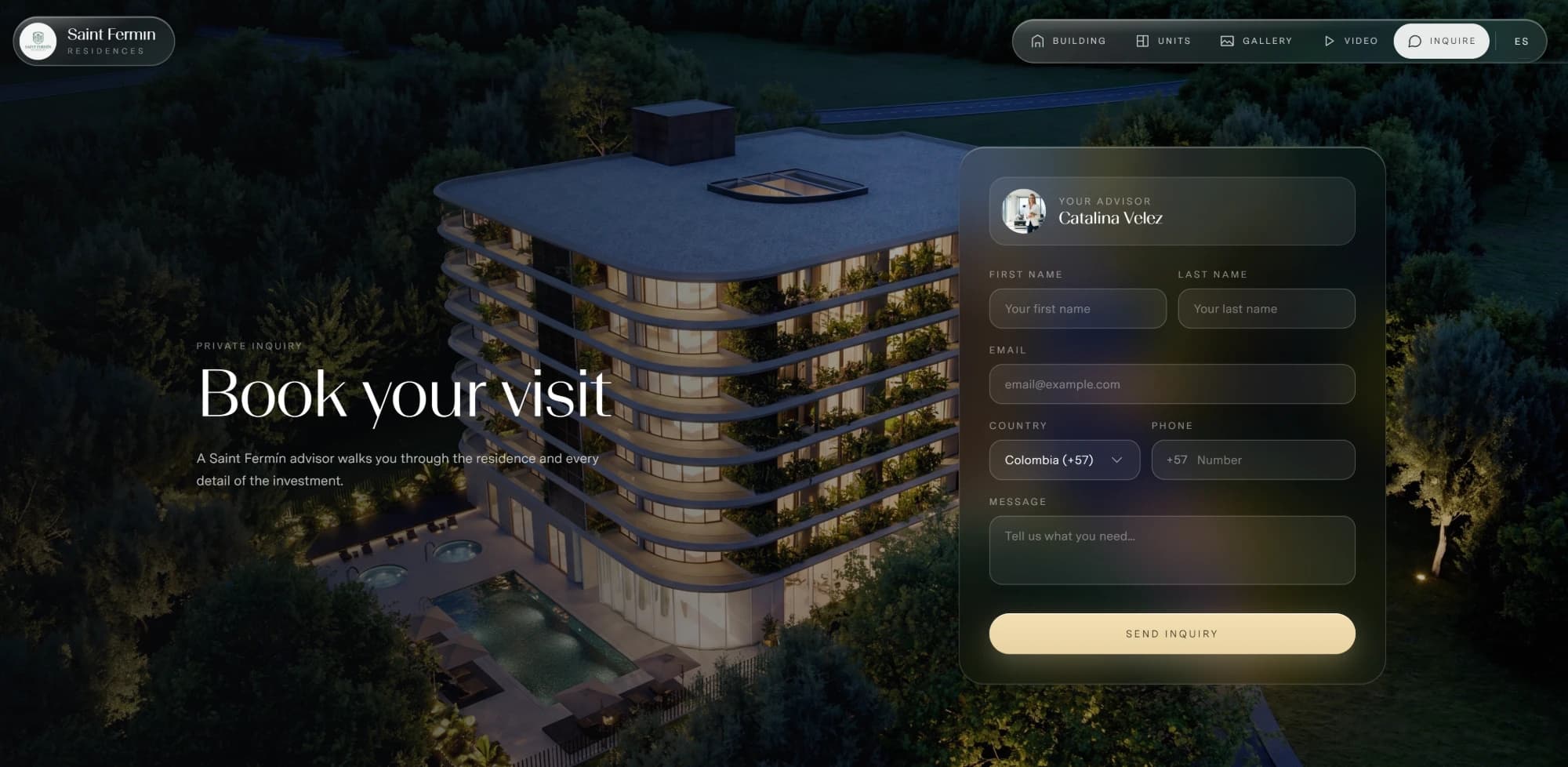
When the buyer decides from a distance, the visuals do the work of the site visit. We created the visuals for The Marlow on Mill, and we have produced the sales content for projects bought across borders. At Havelufer Quartier in Berlin, 98% of the homes sold off-plan while in-person visits were limited, with a 360° tour for each typology. In the Austrian Alps, we have worked as a partner to Park Seefeld since 2021, from concept to sales. And at Saint Fermín Residences, buyers can browse the available homes, explore the amenities and book a visit with an advisor online, from any country.
Every 77 digital showroom comes with an analytics dashboard that shows which units buyers explore, where they come from and which channels bring them, and connects to the developer's CRM. AI agents can work inside the showroom, answering and qualifying enquiries at any hour, in any time zone.
Checklist: is your project ready for a buyer who will never visit?
Can a buyer see every available home, with its views, finishes and plan?
Does the project show the place, not only the building?
Does it work in the buyer's language, and perfectly on a phone?
Can a buyer book a call, reserve and sign without traveling?
Does the sales team know which units each buyer explored before the first call?
Do the campaign, the showroom and the documents look like the same project?
Selling to buyers who live somewhere else?
We create the visuals, the digital showroom and the brand that let a project be understood, trusted and chosen from anywhere.
From the first render to the closed deal.
Let's talk about your project
Sources
National Association of Realtors, 2026 International Transactions in U.S. Residential Real Estate (July 2026)
National Association of Realtors, 2025 Profile of Home Buyers and Sellers
MIAMI REALTORS, International Report (January 2026)
MIAMI REALTORS, South Florida New Construction International Buyers Report (July 2025)
Colegio de Registradores de España, Estadística Registral Inmobiliaria, Q2 2026
Zillow, Consumer Housing Trends Report 2025
Dubai Land Department, Digital Sale service on the Dubai Now app (October 2025)
Pam Golding Properties, The Marlow on Mill launch (September 2025)