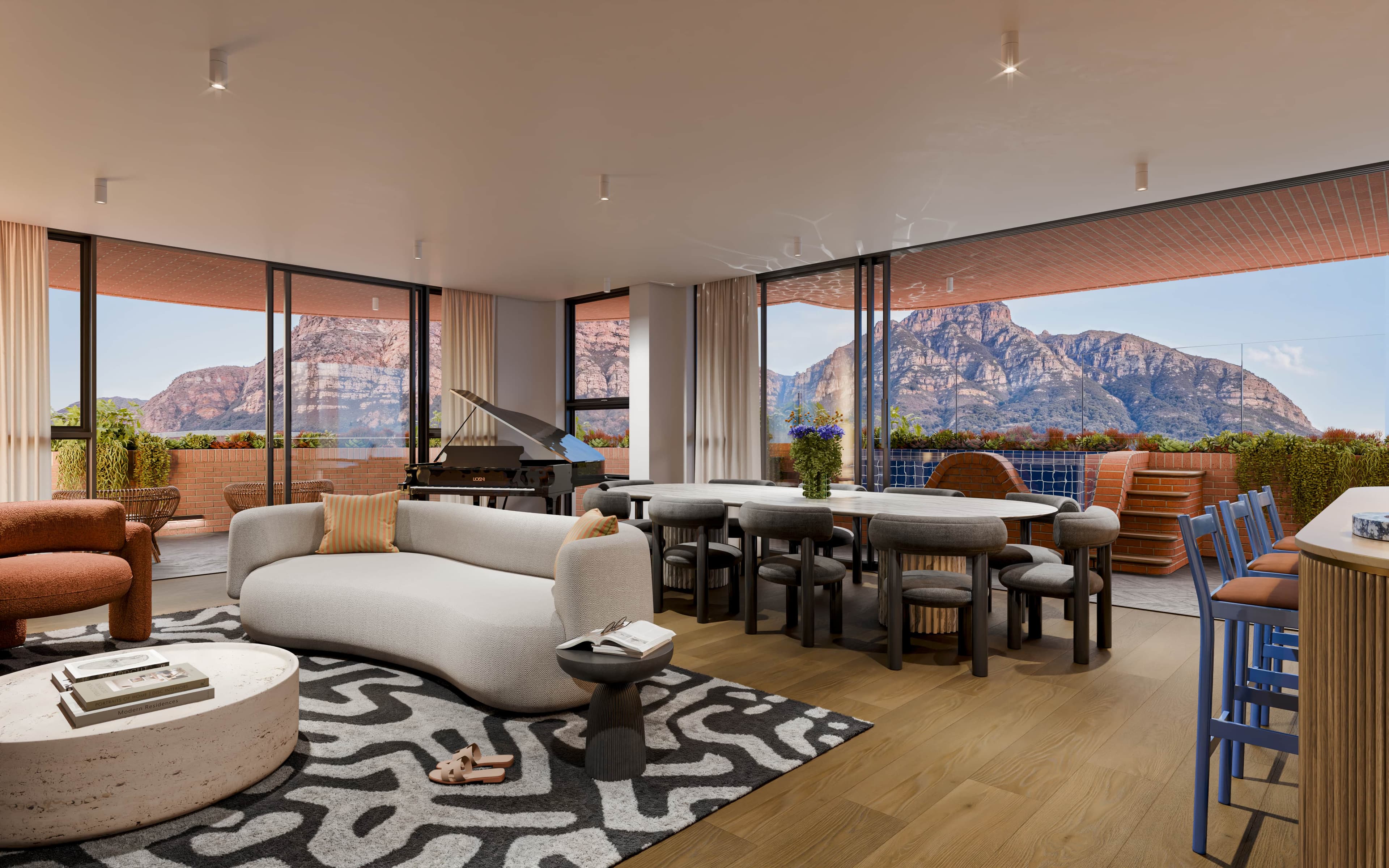
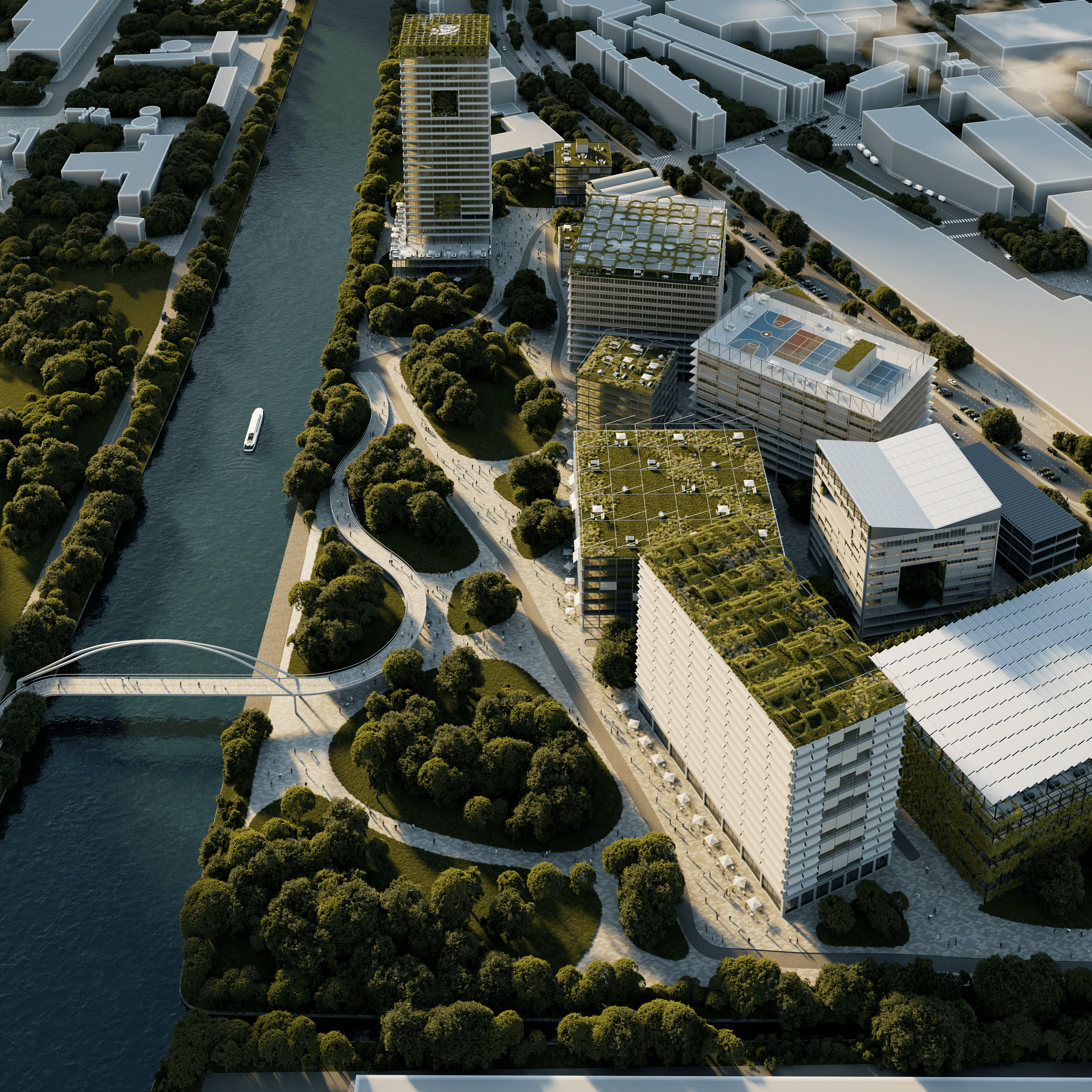
What does CGI actually change in a pre-sale?
Three things: timing, reach and certainty. Visualization lets a project go to market before construction, lets buyers in other cities commit without visiting, and answers the questions that would otherwise stop a reservation. Faster pre-sales are the result of those three working together.
A finished building sells through visits, photos and the product itself. An off-plan project has none of that. Until the first floors go up, the images, plans and digital experience are the only way a buyer can evaluate what they are being asked to commit to. That is why CGI sits at the centre of a pre-sale, and not at the end of the marketing plan.
1. It lets you start selling earlier:
Pre-sales usually have to happen before construction, not after. CGI is what makes a project sellable at the stage when it still exists only on paper.
In many markets, that timing is not optional. In Canada, banks typically require around 70% of condo units to be presold before approving construction financing. (The Globe and Mail via Connect CRE Canada, May 2026) In Dubai, off-plan remains the dominant way new homes are sold: it represented 72% of residential transactions in Q3 2026, even as overall volumes fell 38% year on year. (Cavendish Maxwell, October 2026)
The earlier a developer has convincing visuals, the earlier the sales team can start reservations, and the sooner the project reaches the threshold it needs to break ground.
2. It widens who can buy:
A sales gallery reaches the people who can visit it. A strong visual package reaches buyers in any city or country, which turns local demand into a much larger pool.
Buyers are more mobile than ever. Knight Frank's 2026 Residence Report notes that the average ultra-high-net-worth residential portfolio grew from 2.9 to 3.8 properties in under a decade, driven by demand for second, third and fourth homes. (Knight Frank, September 2026) The same shift happens at every price point: more buyers are evaluating projects they can't easily visit.
On Park Seefeld, an alpine resort in Tyrol, many buyers decide from home. The content had to explain the place, the residence and the investment without a site visit.

3. It removes the doubts that stop a reservation:
Buyers hesitate when they can't picture the space, the finishes or the view. Every question the visuals answer is one less reason to wait.
Even for homes that already exist, buyers lean heavily on visuals. In the National Association of Realtors' 2025 Profile, 81% of US buyers rated photos as very useful, 77% valued detailed property information and 57% valued floor plans. (NAR, July 2024 to June 2025) An off-plan project has no photos to offer. Its renders, plans and walkthroughs have to carry all of that weight.
The questions are concrete: How much light does the living room get? What does the view look like from this floor? What exactly are the finishes in the kitchen? The more precisely the visuals answer them, the shorter the path to a signature.
4. It sells each unit, not just the building:
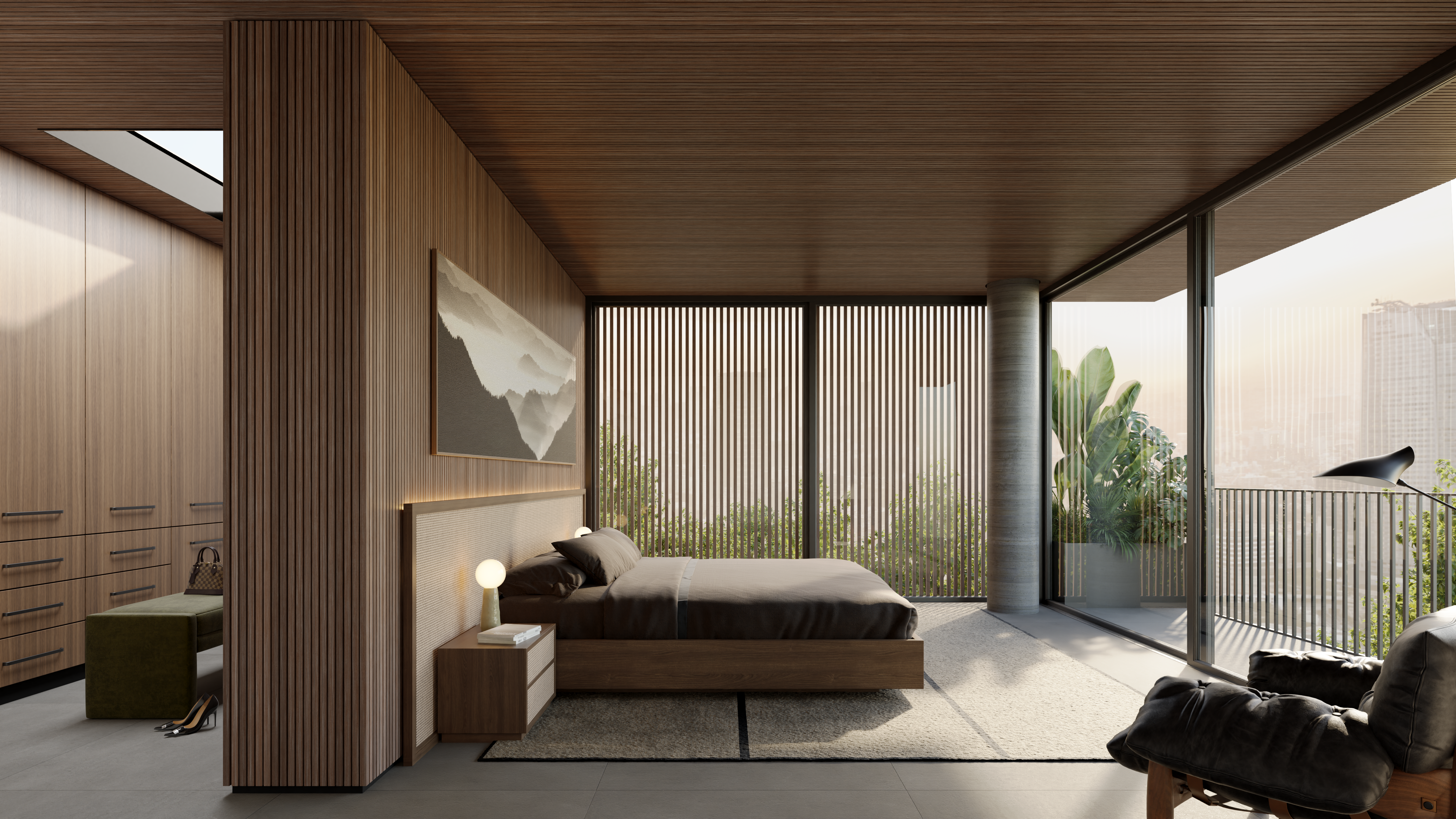
A buyer doesn't purchase a façade. They purchase one specific home. Visuals tailored to each typology let every buyer see the unit they are choosing.
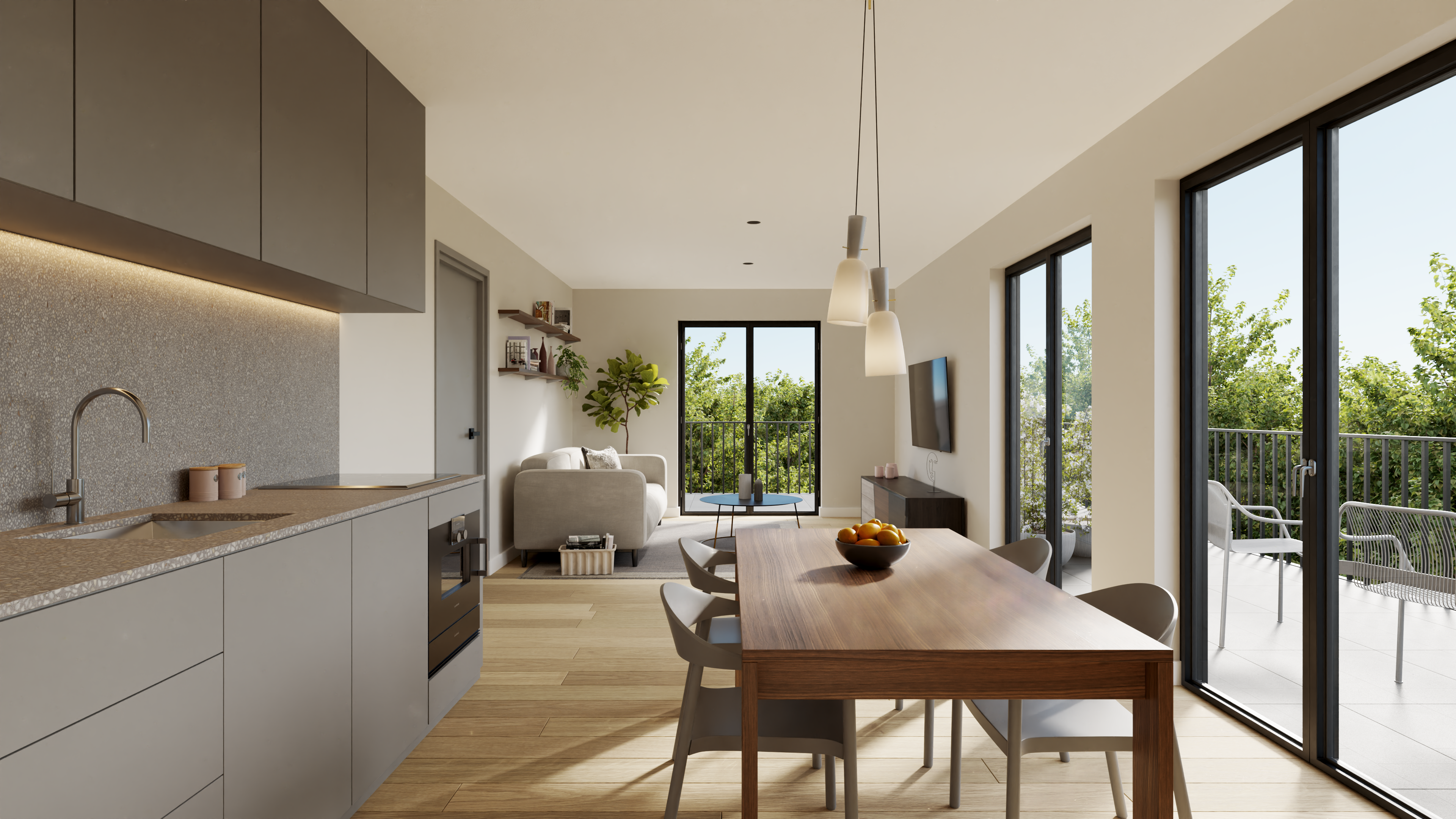
Showing the penthouse to someone choosing a two-bedroom apartment creates expectations the unit can't meet. Interiors, floor plans and views rendered for each typology, with their real orientation, help the buyer commit to their home rather than to the idea of the building, and make it easier for the sales team to move every type of unit, not just the most photogenic one.
5. It can support price, not only speed:
When buyers can see the quality of materials and spaces, they can value them. But the tool alone is not enough: the quality of the image is what makes the difference.
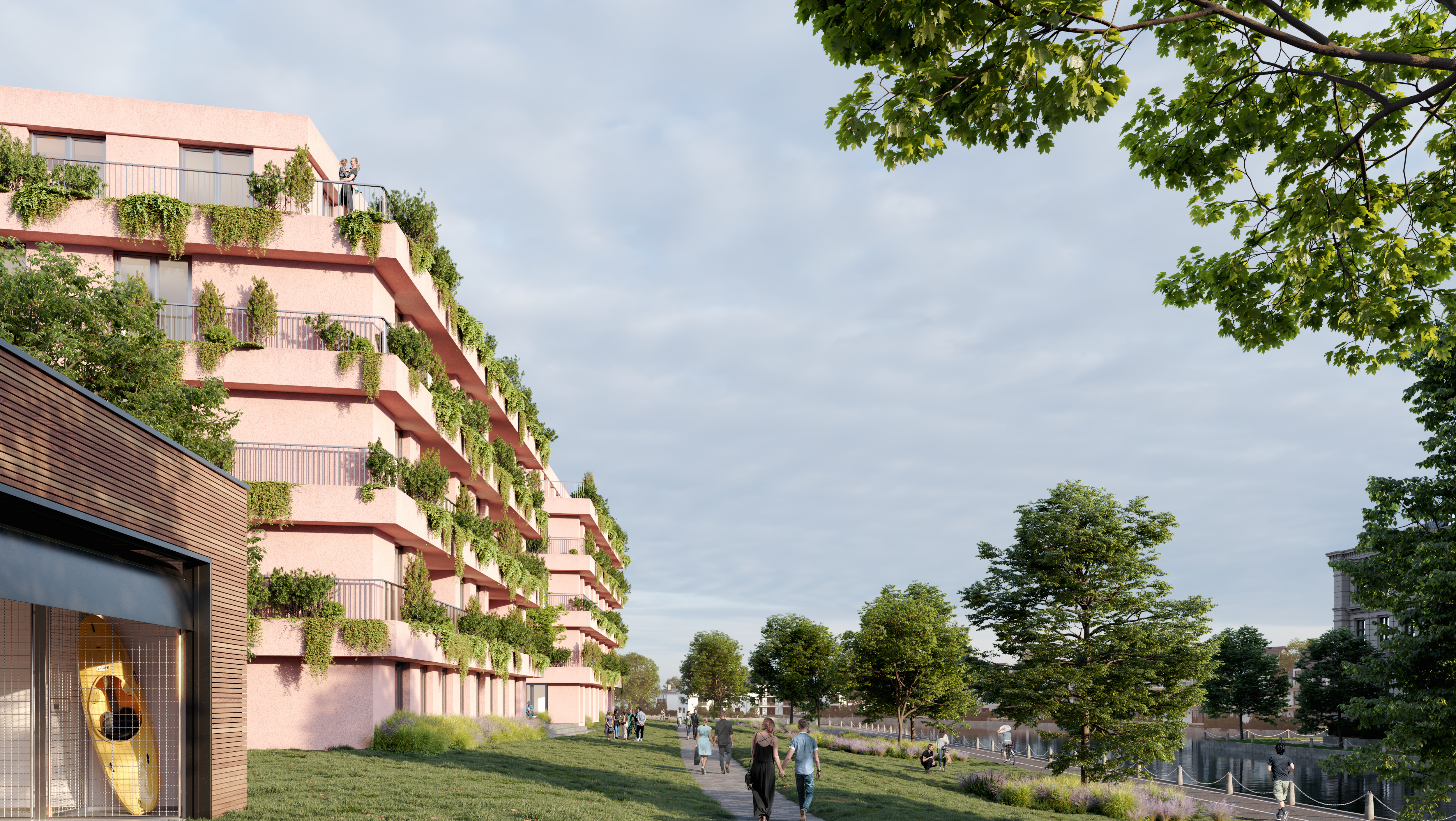
On Havelufer Quartier in Berlin, the project reached 98% sold off-plan during the pandemic, and the developer reported a price uplift of around €2/m², attributed to the material quality shown in the visuals. The visualization package represented about 0.014% of the project's value.
There is an important nuance. A study of more than 75,000 home sales in Los Angeles, published by Harvard Business School, found that once photo quality was taken into account, simply adding a virtual tour had no significant effect on sale price. (Harvard Business School Working Knowledge, 2023, Redfin data 2019 to 2021) In other words, having the tool is not what moves the buyer. What moves them is how well the project is shown.
Where CGI can't help
Visualization accelerates a project that makes sense. It can't fix a price that is out of market, a weak location or a product that doesn't match its buyer, and it should never promise more than will be built.
Credibility is part of the sale. Every material, view and detail in a sales image has to match what will be delivered, because the off-plan buyer is trusting that image. A pre-sale won on exaggeration tends to be paid for later, at handover. We wrote about that line in our pillar guide on selling off-plan.
How to measure the impact on your pre-sales
Track the levers, not just the final number: how early you started selling, how many reservations came in each month, how many buyers reserved without visiting, and what the visuals cost as a share of project value.
Timing: Weeks from launch to presale target
Velocity: Reservations per month, by typology
Reach: Share of buyers who reserved without visiting
Efficiency: Visualization cost as a share of project value
Preparing a pre-sale launch?
77 is a full-stack visualization and PropTech studio for real estate. We create the renders, films and digital showrooms that let buyers understand, trust and reserve a home before it's built.
From the first render to the closed deal.
→ Start a project with 77