What is the difference between a virtual tour and a digital showroom?
A virtual tour shows a space. A digital showroom sells a project. The tour is one experience inside the sale; the showroom is the whole sales gallery online, with every home, live availability, plans, the place and a direct path to your sales team.
Purpose: a virtual tour helps a buyer feel a home. A digital showroom helps a buyer decide which home to buy, and helps you sell it.
Scope: a tour covers one unit or one space. A showroom covers the whole project: building, amenities, location, every typology and every available unit.
Buyer journey: a tour ends when the buyer leaves the room. A showroom guides them from discovery to comparing units to booking a call or a visit.
Data: a tour tells you little about the buyer. A showroom with analytics shows which units each buyer explored, where they come from and which channel brought them.
Sales team: a tour is a marketing asset. A showroom is a sales tool that connects to your CRM and feeds your team qualified leads.
What is a virtual tour?
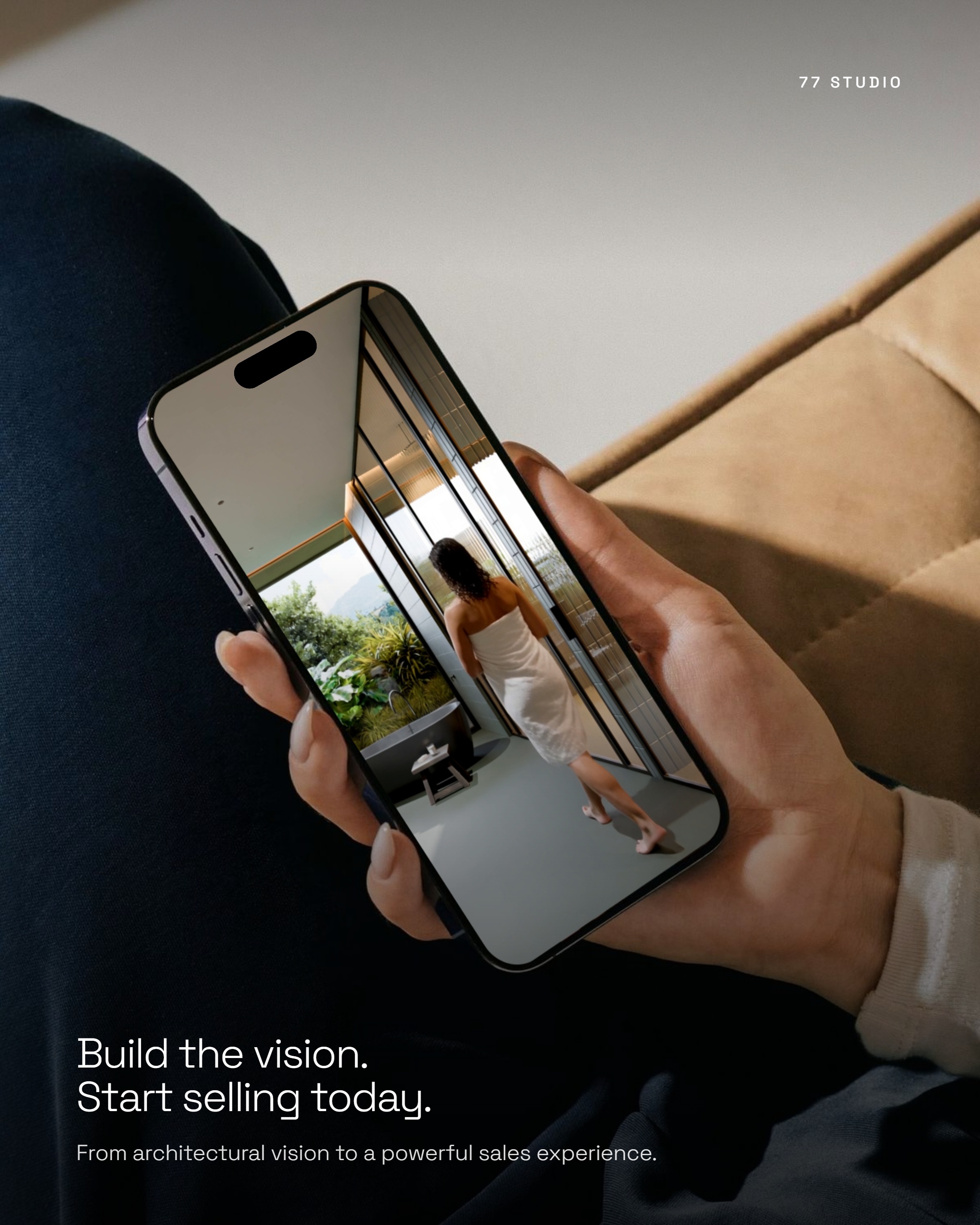
An immersive way to move through a space online, usually a 360° or 3D tour of a unit, a model apartment or an amenity. It gives a buyer the sense of scale, light and layout that photos cannot.
Buyers value it. In the US, 70% of buyers say 3D tours give them a better feel for a home than photos, and 65% wish more listings had them. (Zillow, Consumer Housing Trends Report 2025) For an off-plan project, a 360° tour built from CGI is often the closest a buyer can get to standing inside a home that does not exist yet.
What a tour does not do is help a buyer choose between 40 or 200 homes, show what is still available, or tell your sales team who is interested in what.
What is a digital showroom?
It is your sales gallery, online and open to every buyer, in every country, at any hour. It brings the whole project together in one place and turns interest into enquiries your sales team can act on.
A complete digital showroom usually includes:
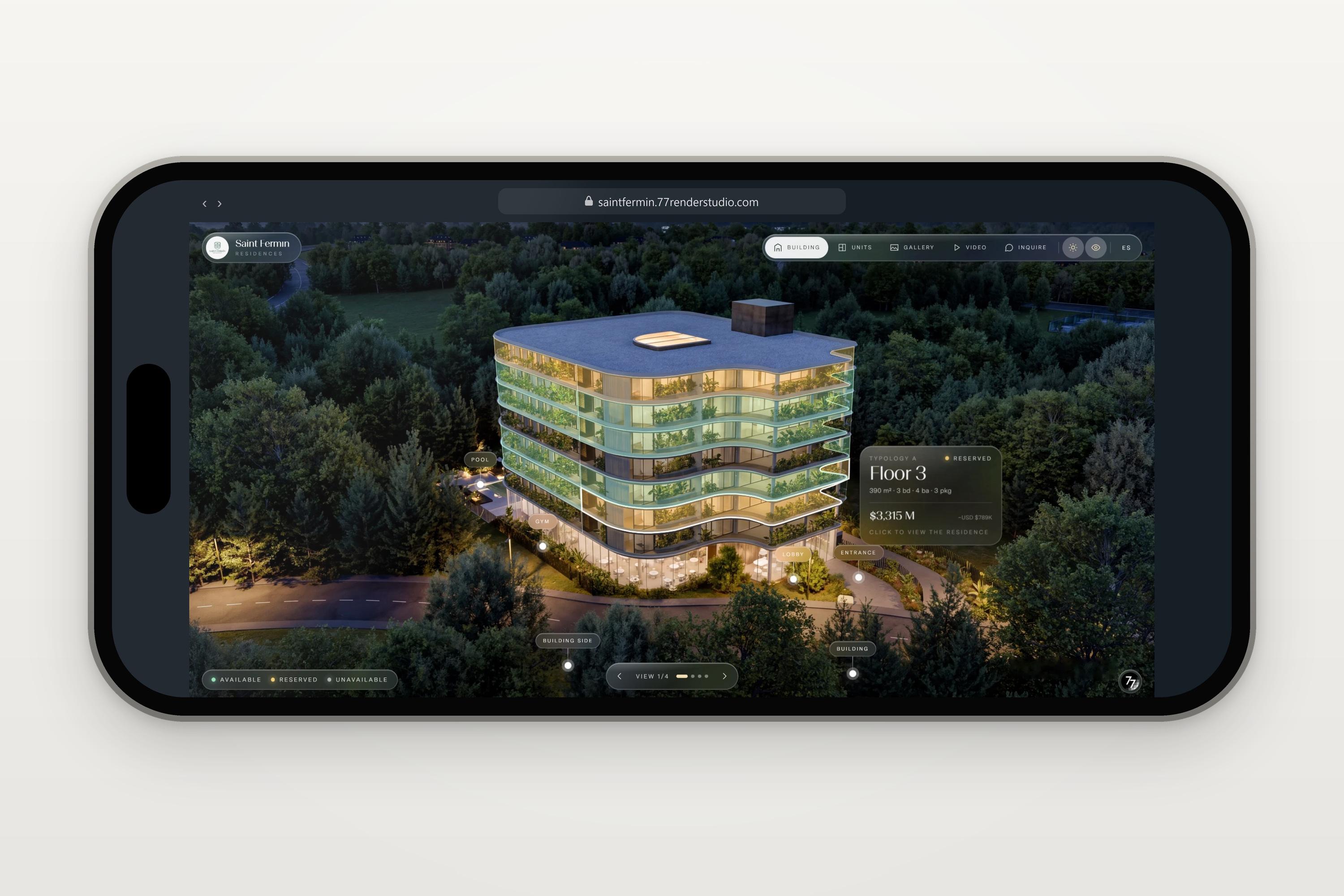
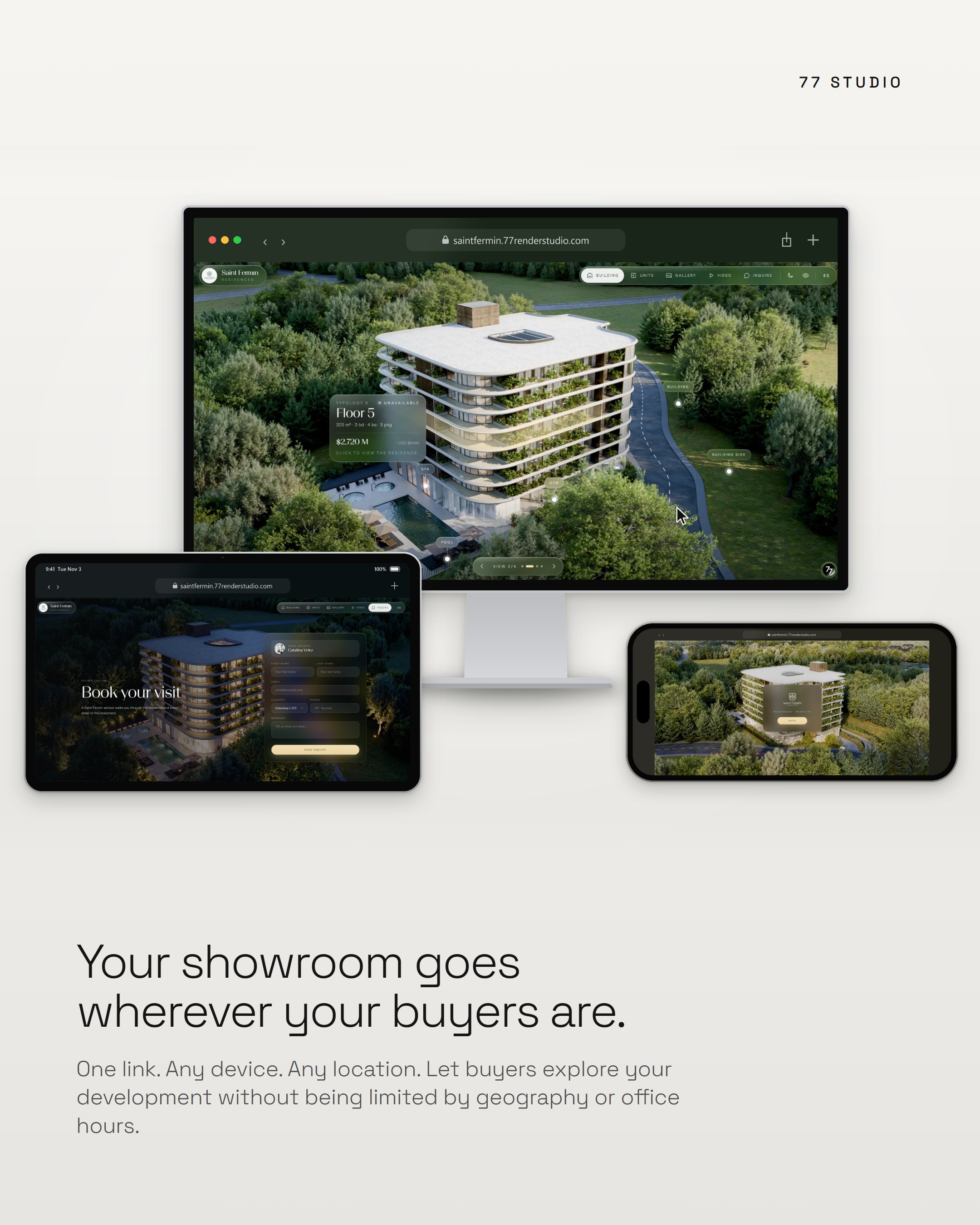
An interactive view of the building or masterplan, where buyers select a floor and a unit.
Live availability and, if you choose to show them, prices.
Each typology with its interiors, views, finishes and plans, including 3D isometric plans.
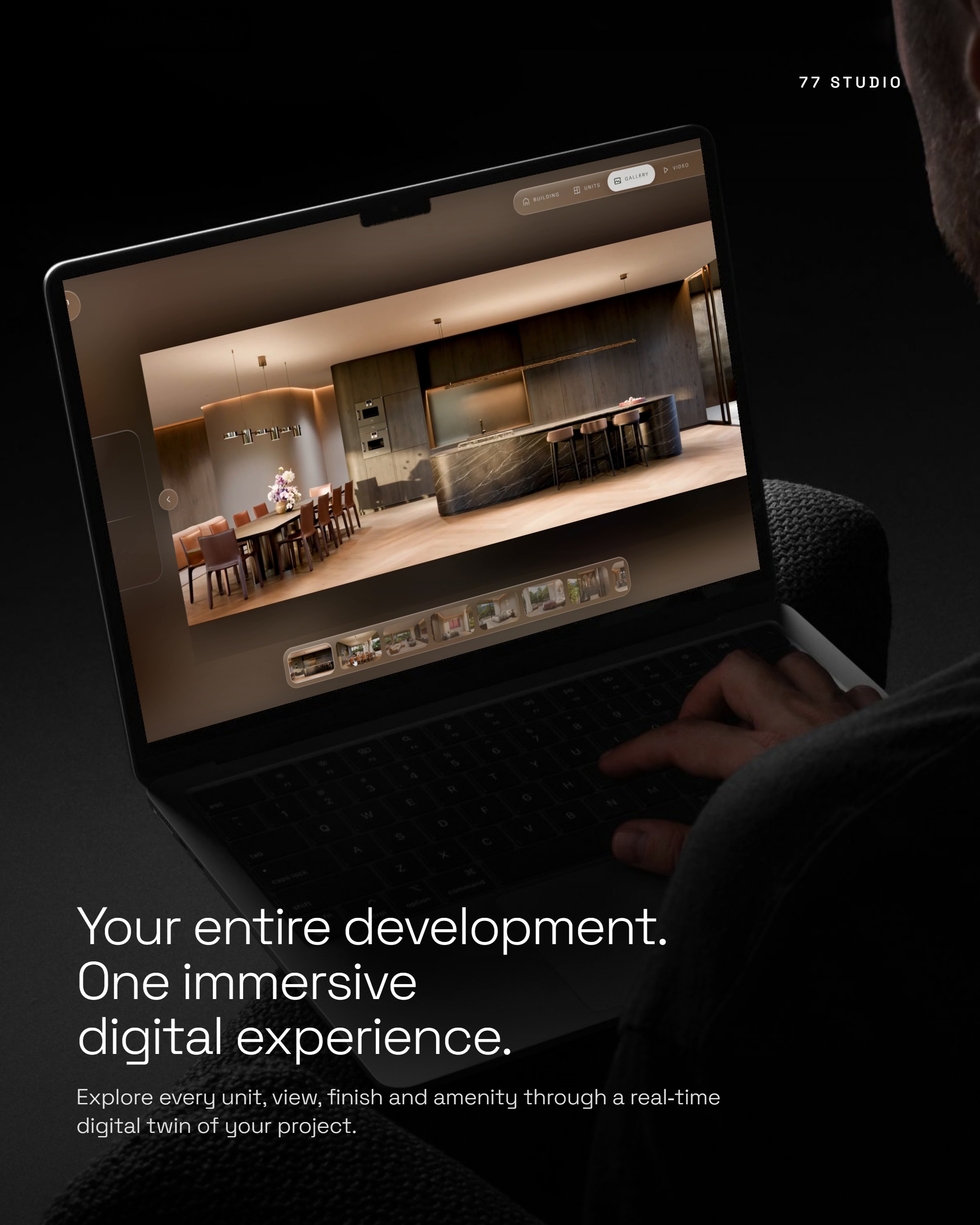
Virtual tours, films and galleries of the amenities and the location.
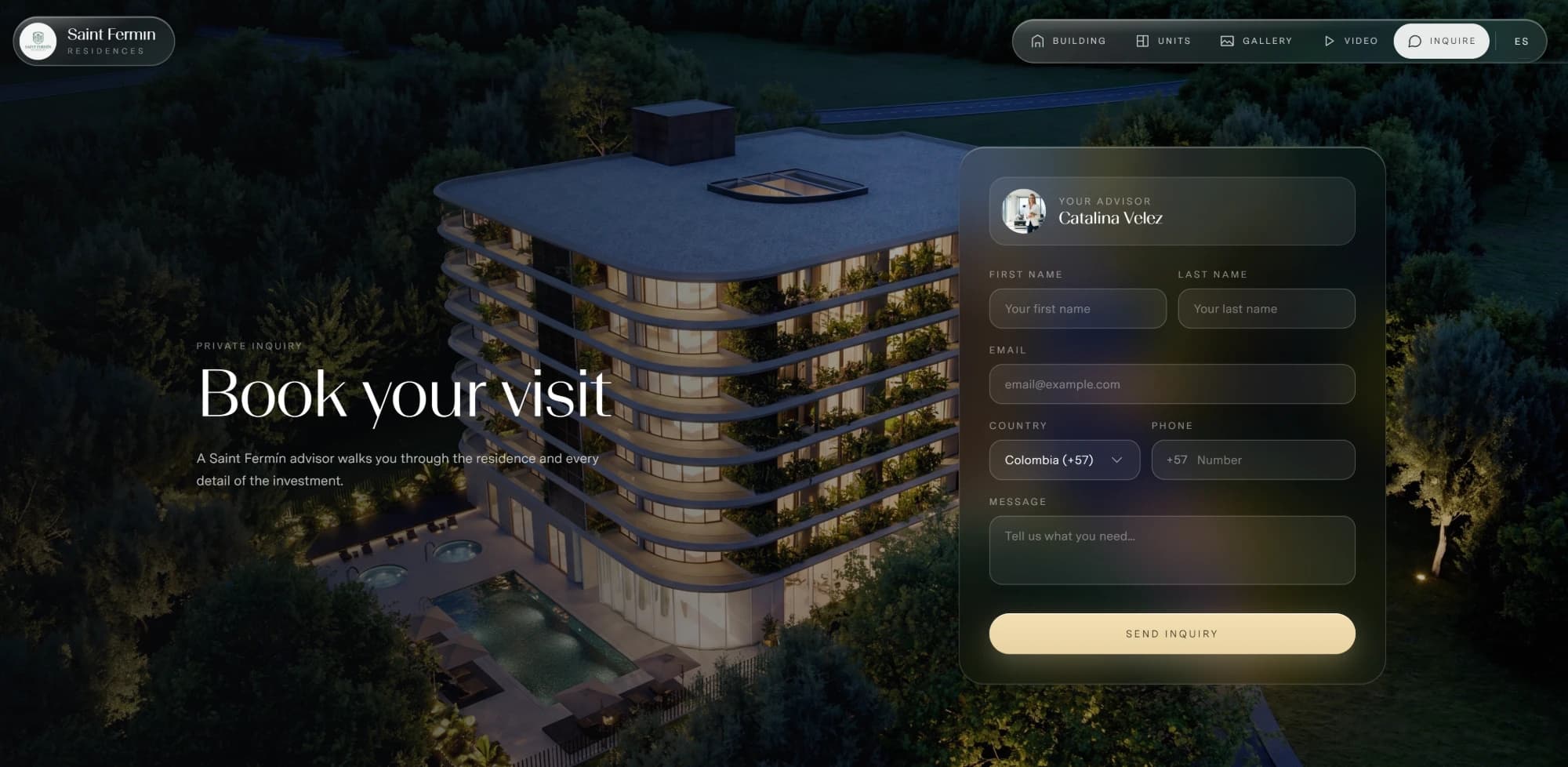
A direct path to sales: book a visit or a call with an advisor, send an enquiry.
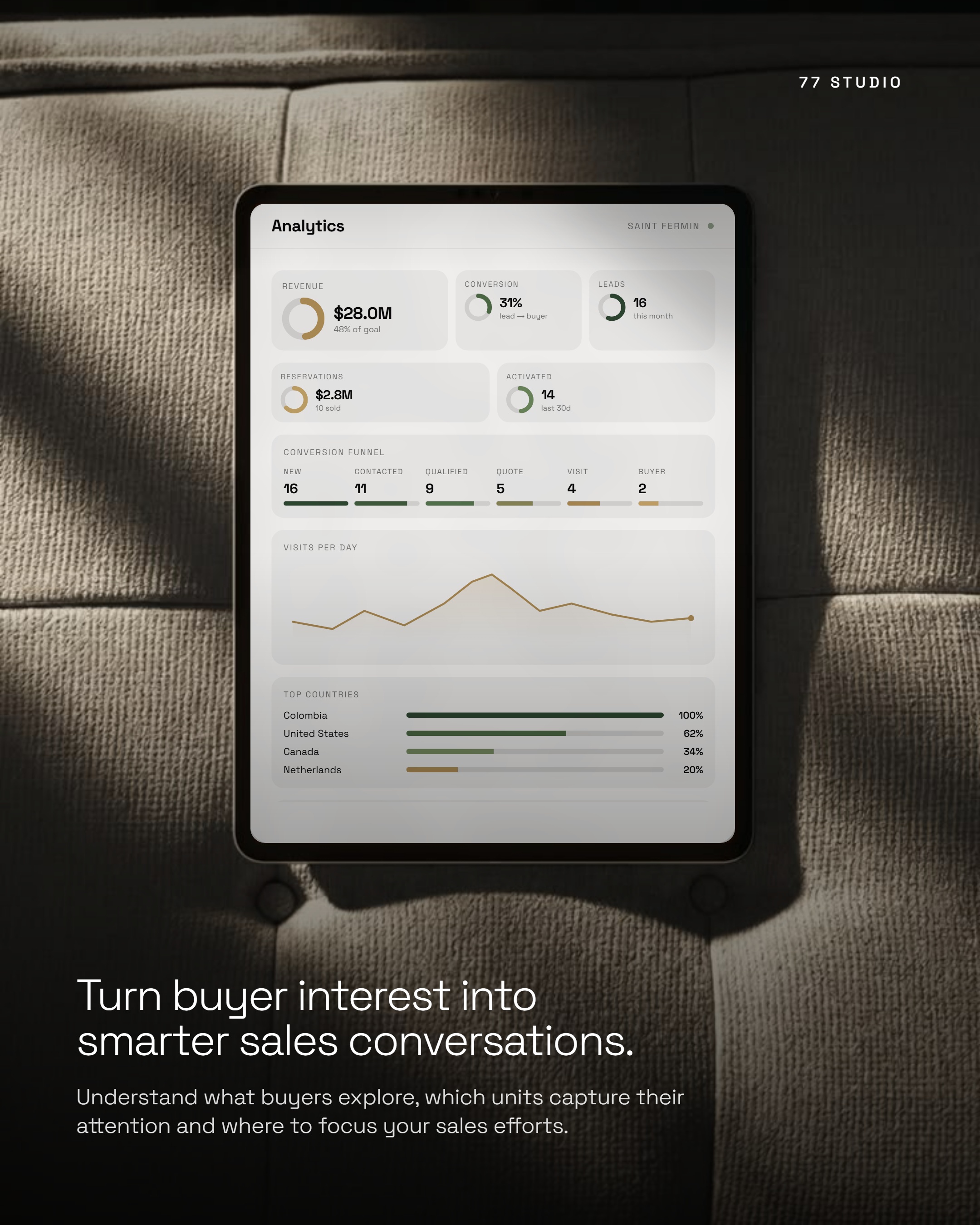
An analytics dashboard connected to your CRM, and optionally AI agents that answer and qualify enquiries at any hour.
In other words, the virtual tour lives inside the showroom. It is one of the experiences a buyer uses to decide, not the whole decision.
Why does the difference matter for your sales?
Because buyers make most of the decision before they ever speak to you. What they find online decides whether they call, and which home they call about.
In the US, 52% of buyers found the home they bought online, and buyers rate photos (81%), detailed property information (77%) and floor plans (57%) as very useful website features. (NAR, 2025 Profile of Home Buyers and Sellers) A virtual tour answers one of those needs. A digital showroom answers all of them at once, for every unit, and keeps the buyer inside your project instead of sending them to a portal full of competitors.
There is also what happens after the visit. A tour that is shared on social media generates attention. A showroom generates enquiries that arrive with context: which units the buyer explored, how long they stayed and where they are browsing from. That is the difference between a cold lead and a sales conversation.
When is a virtual tour enough?
When you are selling one home, or very few, and the buyer already knows which one they want to see.
A single resale home or penthouse.
The last few units of a project that is already built.
A model unit or an amenity you want to show on social media and in campaigns.
When do you need a digital showroom?
Whenever the buyer has to choose, and especially when they have to choose before the building exists.
Off-plan launches: pre-sales depend on buyers understanding the exact home they are reserving.
Projects with many units and typologies: buyers need to compare floors, views and layouts in one place.
International and remote buyers: the showroom replaces the trip to the sales gallery.
Phased releases: live availability and demand data help you decide what to release next and at what price.
Several sales channels: brokers, your own team and campaigns all point to the same, always up-to-date place.
How does a digital showroom help the sales team?
It turns browsing into information your team can use. Instead of guessing which units are attracting interest, you see it.
Demand by unit: know which homes, floors and views attract the most attention before you adjust prices or releases.
Demand by market: see which cities and countries your buyers come from, and invest your campaigns where they work.
Channel performance: measure which ads, portals or brokers bring buyers who actually explore and enquire.
Better first calls: every enquiry reaches your CRM with the units the buyer explored, so the conversation starts where the buyer already is.
How 77 builds virtual tours and digital showrooms
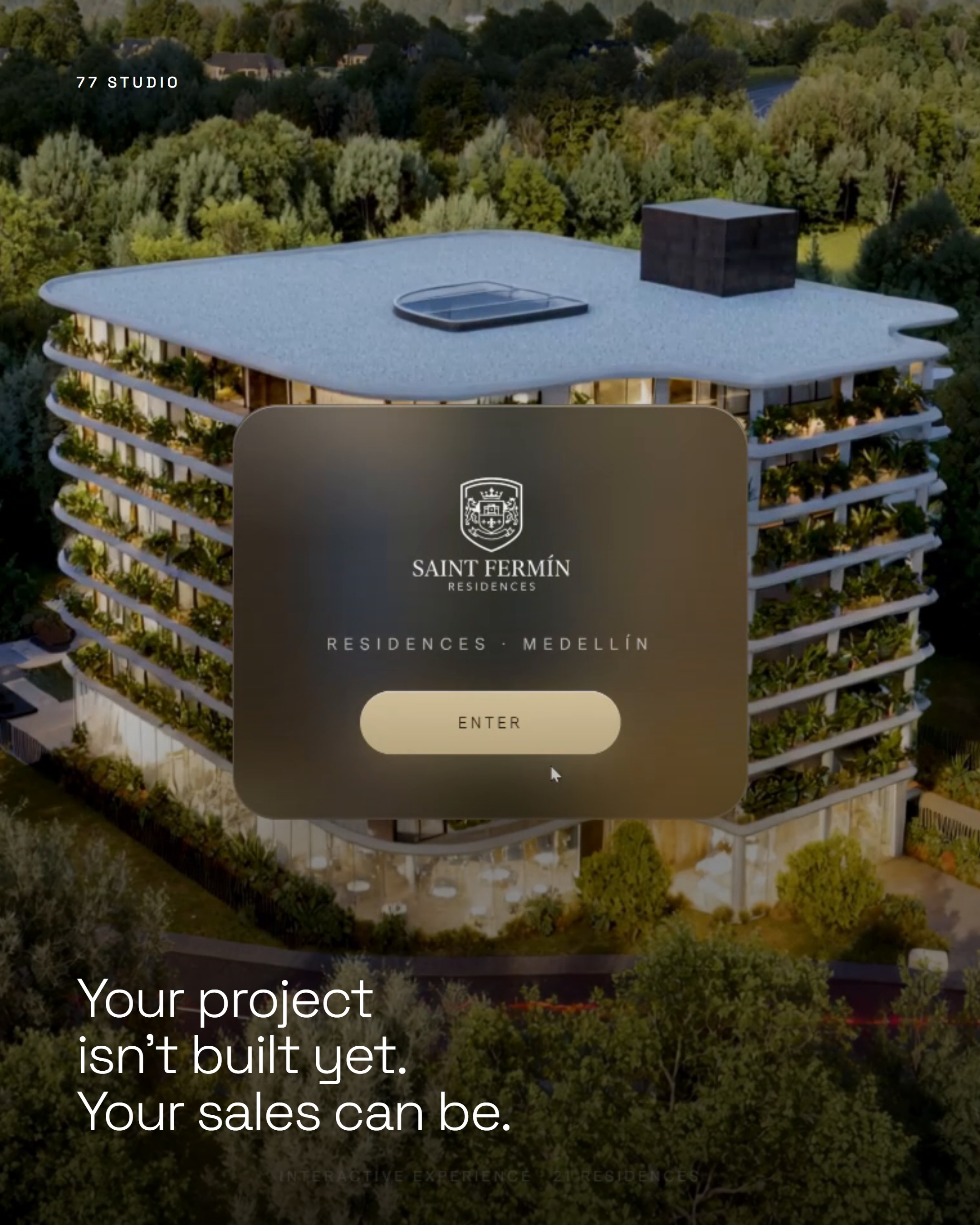
We work as a sales and marketing ally for developers, so we build both, and we build them to work together. At Havelufer Quartier in Berlin, every typology had its own 360° tour, and 98% of the homes sold off-plan while in-person visits were limited. At Saint Fermín Residences, the digital showroom lets buyers select a floor and a unit on the building, see availability and price, explore every typology and book a visit with an advisor online, from any country.
Every 77 showroom is built from our own CGI, so the renders, the tours, the films and the plans share one visual language with the brand and the campaign. And every showroom comes with an analytics dashboard that connects to the developer's CRM, so the sales team sees real demand from day one.
Checklist: is a virtual tour enough for your project?
Are you selling more than a handful of homes?
Are you selling before construction is finished?
Do buyers need to compare floors, views or typologies?
Are some of your buyers in other cities or countries?
Would you price or release differently if you knew which units buyers want most?
If you answered yes to any of these, a virtual tour alone will leave sales on the table. You need a digital showroom, with the tours inside it.
The best strategy: the tour inside the showroom
You don't have to choose. The strongest sales experience puts the virtual tours inside the digital showroom, so the buyer moves from the macro to the micro without leaving your project.
The buyer starts with the big picture: the location, the building, the amenities and every available home. Then they narrow down to a floor, a typology and a specific unit. And at that point, the 360° tour lets them step inside the exact home they are considering, see the light, the views and the finishes, and feel what it would be like to live there. Discovery, comparison and emotion happen in one place, and every step is measured for your sales team. That is how the experience becomes complete, and how interest turns into a reservation.