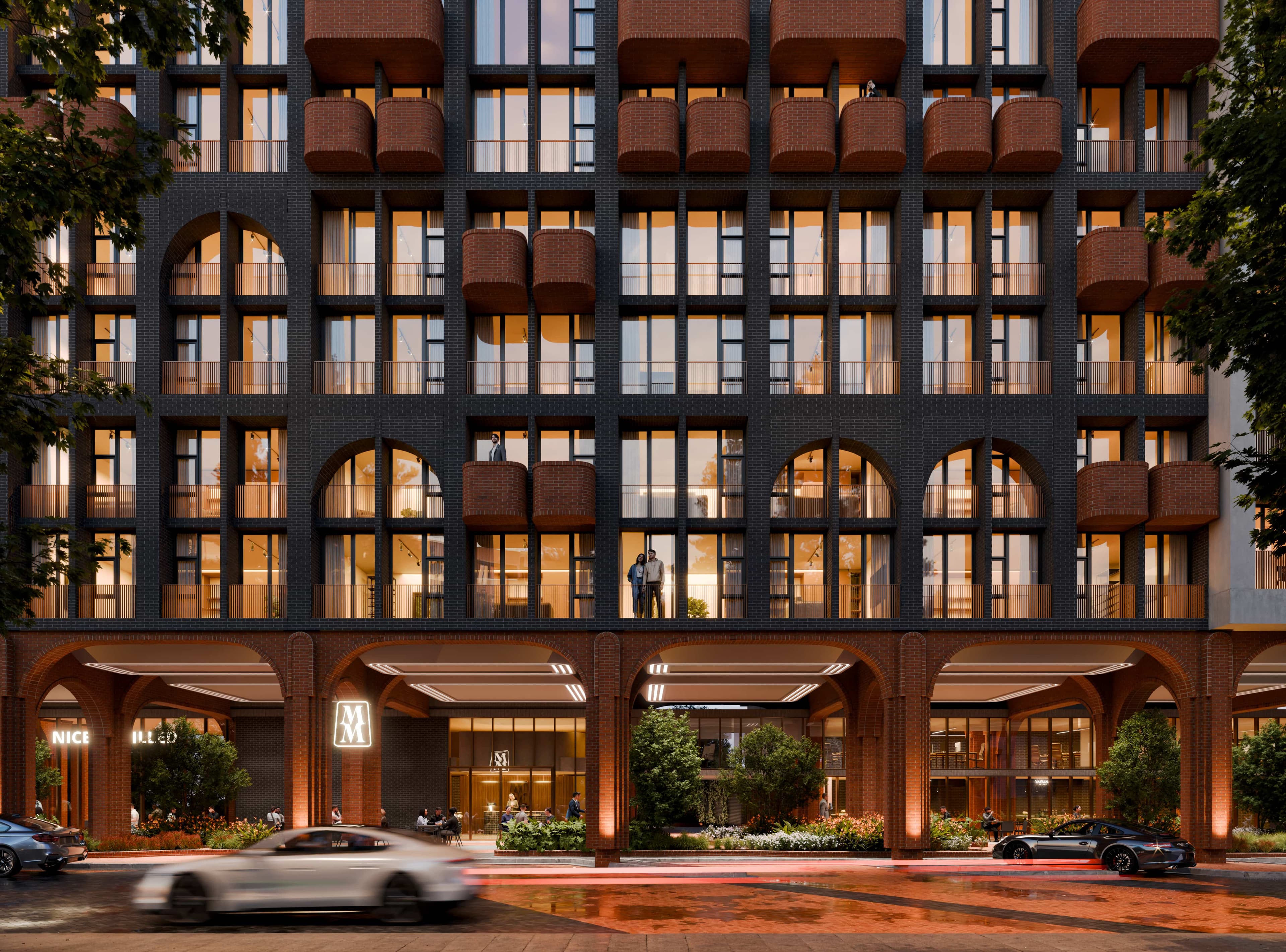
Yes, and increasingly, it's the norm. Sight-unseen offers jumped from about 3% of buyers in 2019 to roughly 20% today, and among people who bought in the last two years it runs far higher. For luxury developers, the remote buyer is now a core market: if your project can be experienced convincingly online, distance stops being a barrier to the sale.
How common is buying sight-unseen now?
It has gone from a rarity to a normal path to purchase. Only 3% of buyers made an offer sight-unseen in 2019; by 2025 that figure sits near 20% (FastExpert / Redfin, 2025), and it peaked around 45% at the height of the buying frenzy. Among people who bought within the last two years, LendingTree found 47% made an offer without touring the home in person. (LendingTree) The behavior is generational: millennials lead at 41%, versus 30% of Gen X and 12% of boomers. (Redfin)
Who is the remote luxury buyer?
They're mobile, time-poor and often paying cash. Cross-border investors, relocating executives, and second-home buyers who live in one country and buy in another. For them, flying in to view every option isn't practical, so they've learned to decide from a screen.
Knight Frank's Wealth Report 2026 describes the extraordinary mobility of today's wealth. And these buyers move fast: close to half of luxury home transactions in recent years were completed in cash (Pacaso), which removes financing delays and makes a remote, decisive purchase entirely feasible.
Why do they commit without visiting?
Because technology now gives them enough to feel sure. Interactive 3D tours, immersive walkthroughs and video have made buyers comfortable enough to act on a listing they've only seen on a screen, the same tech that surveys repeatedly cite as the reason sight-unseen buying keeps rising.
The immersive experience replaces the flight. When a buyer can move through a space, understand the light, the views and the flow, the screen carries the emotional certainty that used to require standing in the room. Add urgency in a competitive market and a cash-ready buyer, and the visit becomes optional.
What makes a remote buyer trust enough to buy?
Trust is built on realism, completeness and control. Realism: honest, photoreal visuals of what's actually being delivered. Completeness: every unit, amenity, view and finish, not a handful of hero shots. Control: an experience they can explore on their own terms, at their own pace, from their own timezone. Listings with immersive tours make buyers roughly 95% more likely to enquire (Matterport) because the experience answers their questions before they have to ask.
What should developers do to capture the remote buyer?
Stop treating the website as a brochure and build it as the showroom. The remote buyer's entire decision happens inside your digital experience, so it has to do everything an in-person visit would: convey the feeling, prove the details, and make it easy to take the next step.
Concretely: an immersive, explorable digital showroom (not a flat gallery); every unit and amenity navigable; the lifestyle shown, not just the floorplan; bilingual and multi-currency for international buyers; and a fast, human follow-up with leads captured and qualified straight into a CRM so no serious buyer goes cold. That's the difference between a project a remote buyer scrolls past and one they reserve from another continent.
Selling to a buyer you'll never meet in person? That's exactly what we build for
77 is a full-stack visualization and PropTech studio for real estate. We create the immersive digital showrooms, photoreal visuals and interactive experiences that let buyers explore, trust and reserve a property from anywhere in the world with every lead captured and qualified straight into your sales pipeline.